
Texas Roadhouse MenuPrices & Calories 2026
All 87 items with current estimated prices, full calorie counts and honest ordering notes. Know what it costs and what it does before you reach the counter.
Searches item names and descriptions — results update as you type.
Updated August 6, 2026Typical U.S. prices — franchises set their own.
Most searched sub
Cactus Blossom
A whole onion cut into petals, battered and golden-fried, served with a Cajun dipping sauce. It is built for sharing and the calorie figure assumes you do not — 2,250 for the whole thing makes it the single heaviest item on the menu, ahead of every steak.
- 87
- Menu items
- 12
- Categories
- $2.99
- Subs from
87 items on the menu
Just For Starters
11 items
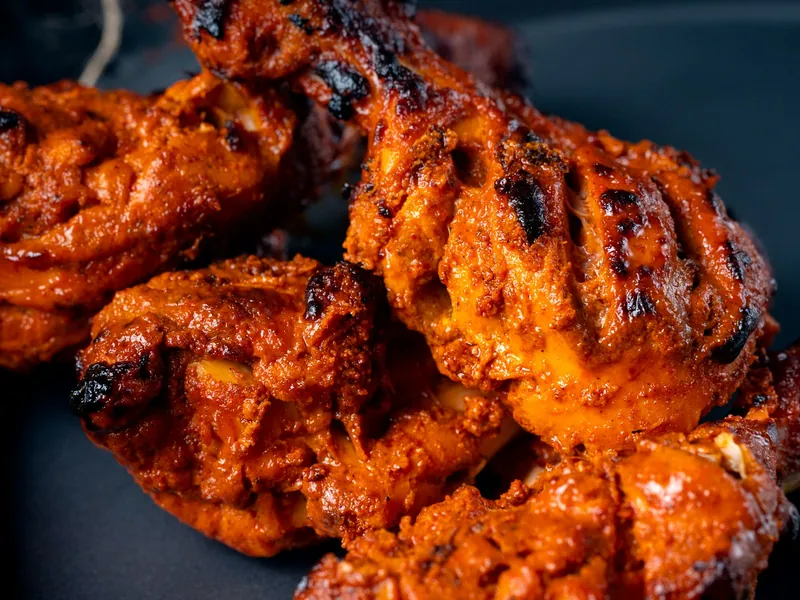
Cactus Blossom
A whole onion cut into petals, battered and golden-fried, served with a Cajun dipping sauce. It is built for sharing and the calorie figure assumes you do not — 2,250 for the whole thing makes it the single heaviest item on the menu, ahead of every steak. Split between four it is a reasonable starter; eaten alone it is a day's intake before your entrée arrives.
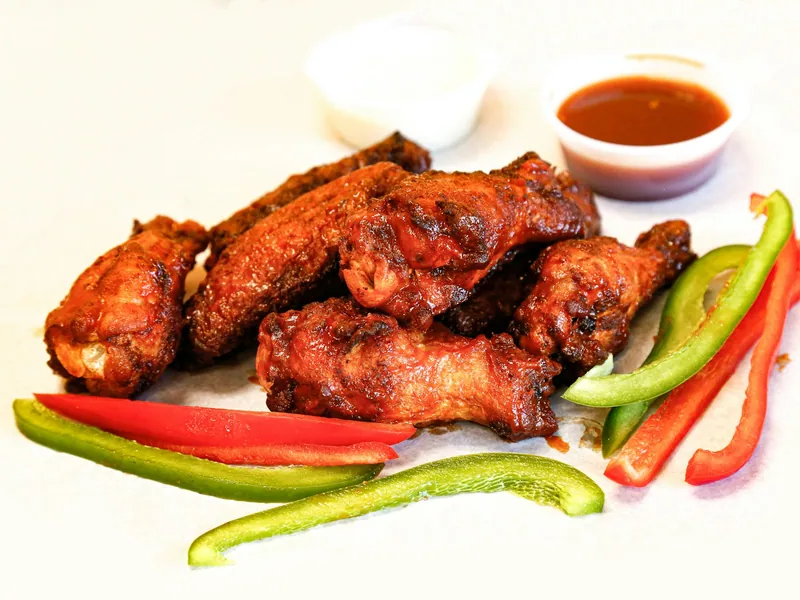
Fried Pickles
Pickle chips in a golden-fried batter with Ranch or Cajun sauce for dipping. At 550 calories it is one of the lighter shareable starters, and the acidity of the pickle cuts through the fry better than most battered appetisers manage. The sauce choice matters more than it looks — Cajun adds heat without much else, Ranch adds a substantial amount of fat.
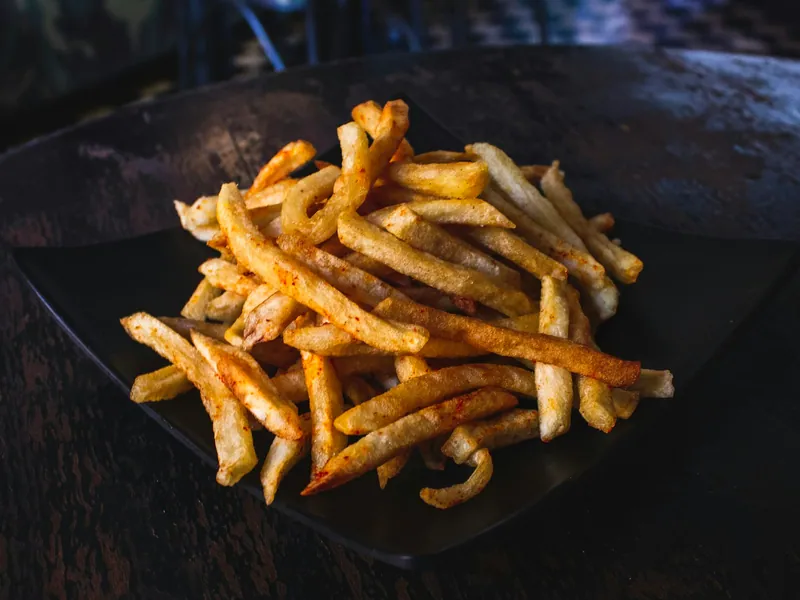
Twisted Mozzarella
Mozzarella sticks twisted and breaded, served with marinara. Straightforward and familiar, and at 710 calories it lands mid-table among the starters. The marinara is the lighter dipping option on the appetiser page at around 40 calories, which is worth knowing if you are watching the total.
Rattlesnake Bites
Diced jalapeños and jack cheese, lightly fried, with Ranch or Cajun sauce. The lightest of the fried starters at 560 calories and the one with genuine heat. They are also the most divisive item on the appetiser list — the cheese-to-jalapeño ratio means the heat arrives after the first bite rather than during it.
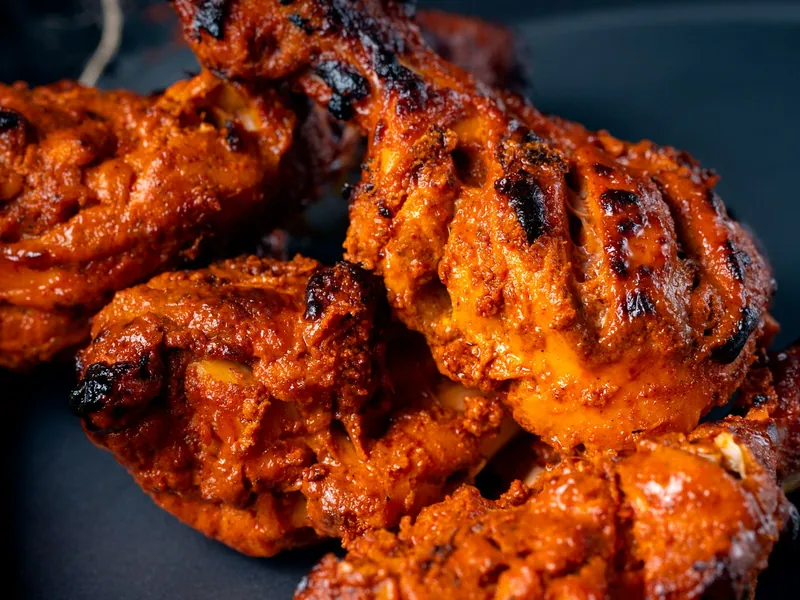
Tater Skins
Eight baked potato skins under melted cheddar and bacon, with sour cream for dipping. At 1,320 calories this is one of the heaviest starters and effectively a meal in its own right. If you are ordering it alongside an entrée, plan on sharing between three or more.
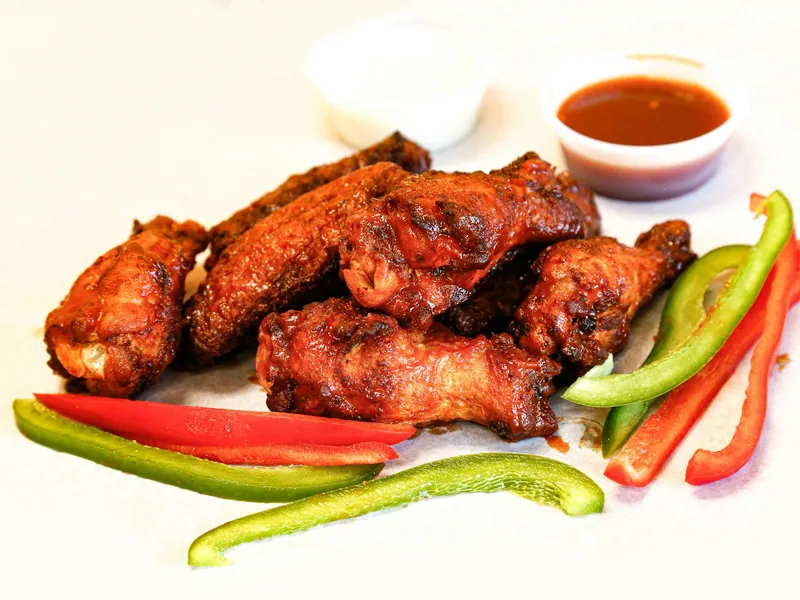
Grilled Shrimp
Seasoned shrimp with garlic lemon pepper butter over toasted bread. At 360 calories it is by a wide margin the lightest starter on the menu — a fifth of the Tater Skins and a sixth of the Cactus Blossom. If you want something before the main without derailing the meal, this is the only appetiser that genuinely qualifies.
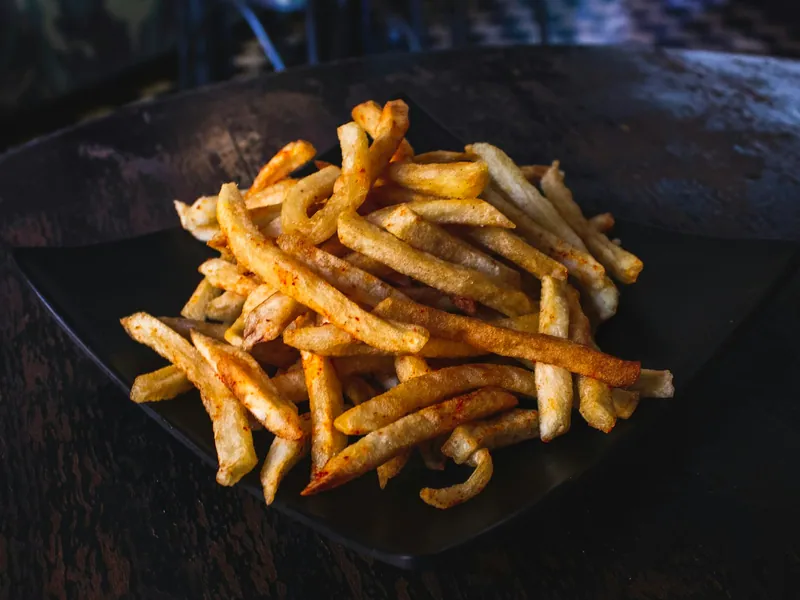
Boneless Buffalo Wings
Breaded white-meat chicken tossed in Mild or Hot sauce with Ranch or Bleu Cheese. The calorie range runs 760 to 860 depending on sauce and dip, and the dip accounts for most of the swing. Ordering the sauce on the side is the single easiest reduction here.
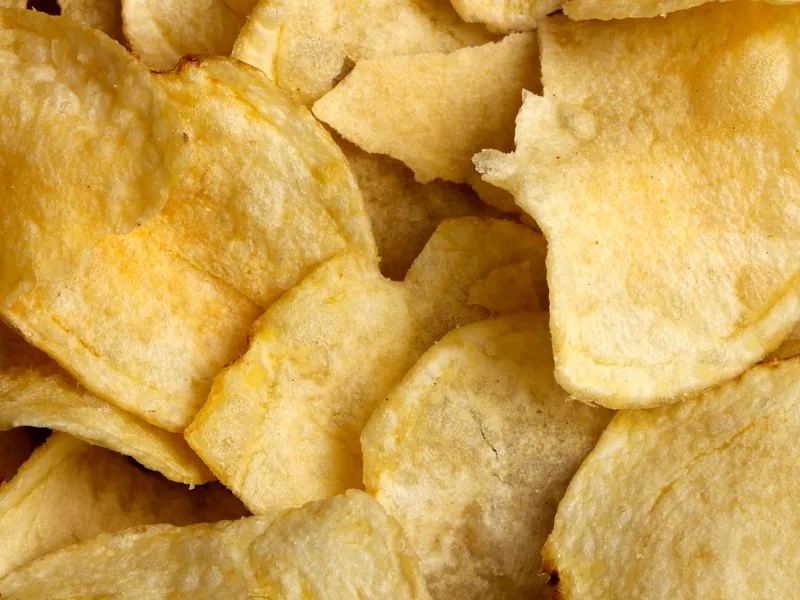
Cheese Fries
Steak fries under melted cheddar and bacon bits, with chili available as an addition. At 1,240 calories before any chili it sits near the top of the starter list. It is also the starter most likely to arrive at the table and quietly replace everyone's appetite for the entrée they ordered.
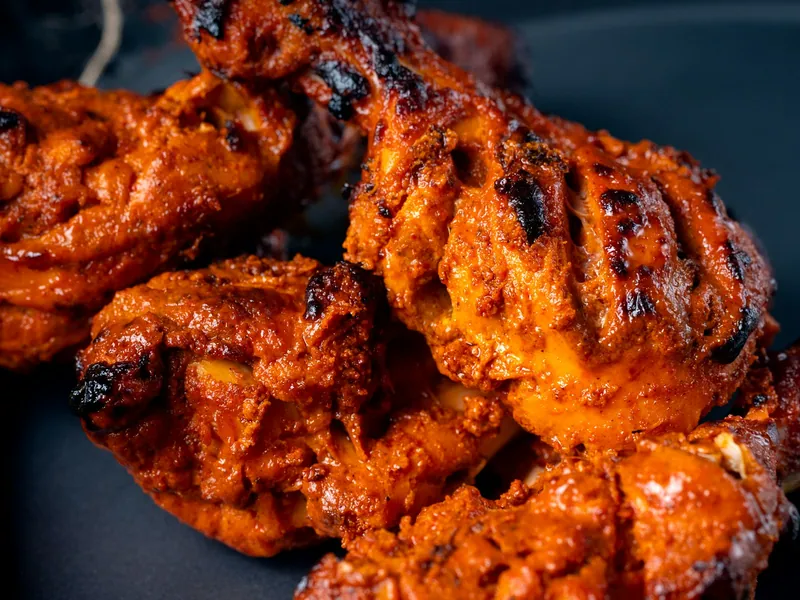
Killer Ribs
A basket of the same slow-cooked ribs from the main menu, served with steak fries. At $11.99 it is the most expensive starter and works better as a light main than as a shared appetiser — the portion is closer to a meal than a taster.
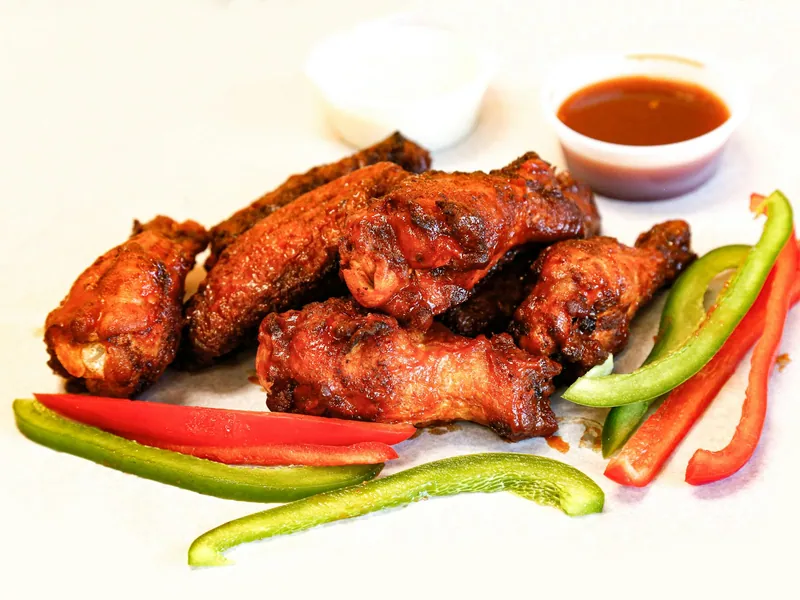
Texas Red Chili
Made-from-scratch chili topped with cheddar and onions, available as a cup or a bowl. The cup at 230 calories is the cheapest hot item on the menu and a genuinely sensible starter. The bowl at 460 calories and $4.99 doubles both.
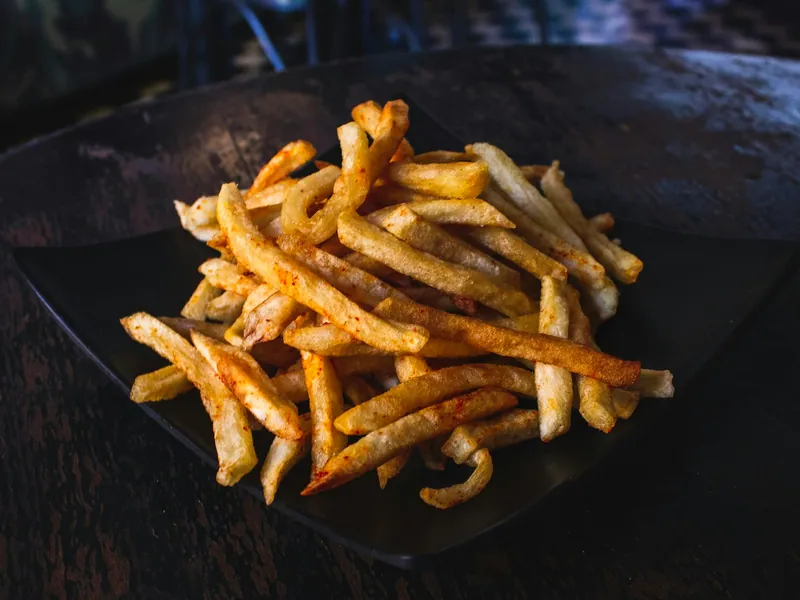
Combo Appetizer
Choose three from Boneless Buffalo Wings, Fried Pickles, Rattlesnake Bites, Twisted Mozzarella or Tater Skins, with two dipping sauces. The 920 to 1,380 calorie range depends entirely on which three you pick — Rattlesnake Bites and Fried Pickles land at the low end, Tater Skins at the high.
Hand-Cut Steaks
10 items
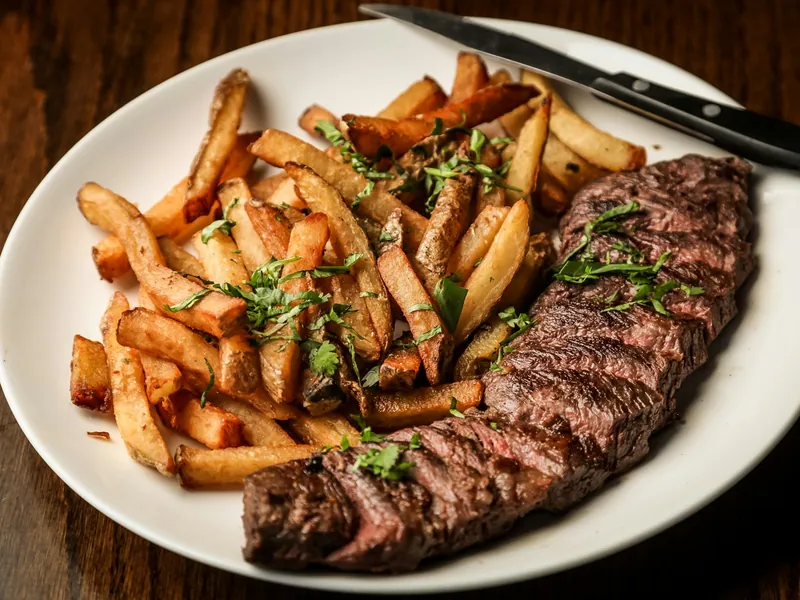
Hand-Cut Sirloin
The entry point to the steak menu and the best value on it. At 250 calories for the 6oz before sides, it is also the leanest cut available — sirloin carries far less marbling than ribeye, which is exactly why it costs less and why it needs less cooking. Order it medium rare; sirloin dries out faster than fattier cuts and there is little margin past medium.
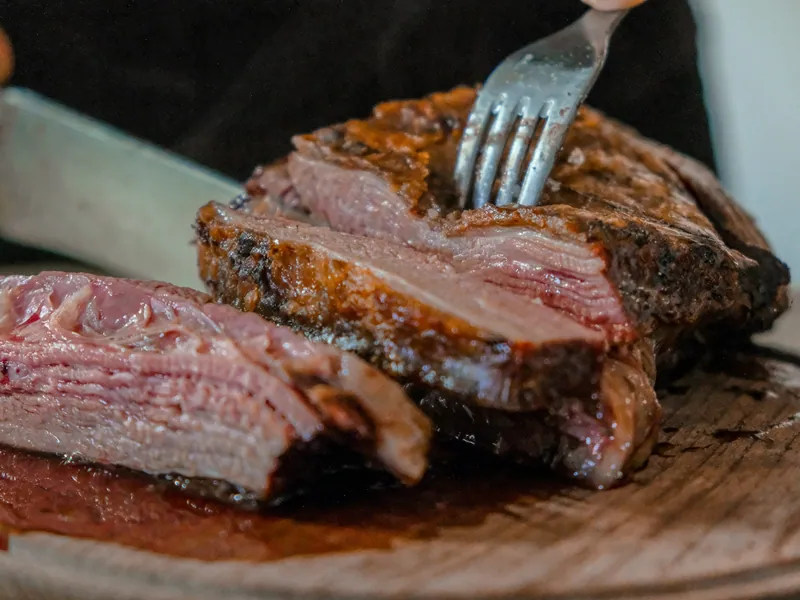
Ft. Worth Ribeye
The marbled cut, and the one most steakhouse regulars default to. Ribeye carries intramuscular fat that renders during cooking, which is where the flavour and the calorie count both come from — 960 for the 12oz against 460 for an 11oz sirloin, for barely more meat. It is the most forgiving steak on the menu to cook, since the fat protects it past medium.
New York Strip
A firmer, beefier cut than ribeye with a defined fat cap rather than marbling throughout. The 8oz Thick Cut at $17.49 and 420 calories is one of the better protein-per-calorie choices on the steak page. The 12oz Traditional Cut is the wider, thinner version of the same cut — same weight profile, different eating experience.
Bone-In Ribeye
A 20oz ribeye left on the bone, and at 1,480 calories the heaviest single steak on the menu. The bone does two things: it insulates one side during cooking so that edge stays rarer, and it adds weight you are paying for but not eating. Worth ordering if you want the ribeye experience at its fullest, less so if you are counting either calories or value per ounce of meat.
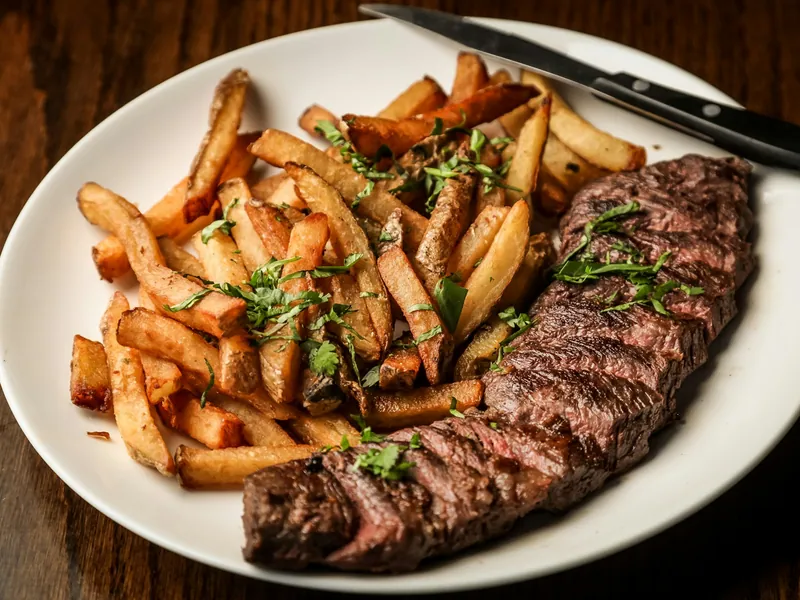
Porterhouse T-Bone
The most expensive item on the menu at $33.99 — a 23oz Texas-sized cut carrying both a strip and a filet either side of the bone. That is the appeal: two different cuts on one plate. At 1,040 calories it is lighter than the Bone-In Ribeye despite being larger, because the filet side is far leaner than ribeye.
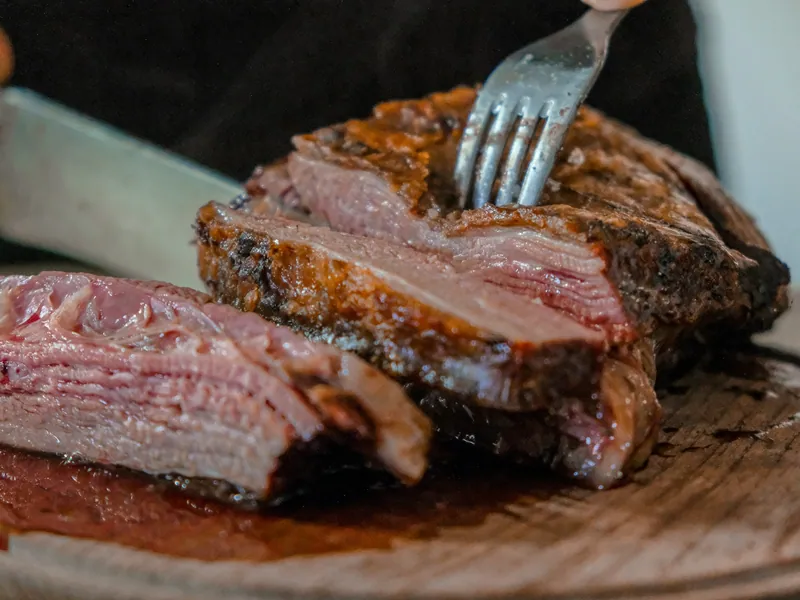
Dallas Filet
The leanest and most tender cut available, and the best calorie-to-price ratio in the wrong direction — $21.99 for 270 calories at 6oz. You are paying for tenderness rather than volume or flavour intensity. Filet has almost no marbling, so it wants to be cooked no further than medium and benefits more than any other cut from a sauce.
Prime Rib
Slow-roasted rather than grilled, which produces a different texture from everything else on the steak page — softer, more uniformly cooked edge to edge. Availability varies by location and by time of day, so it is worth asking before you set your heart on it. Horseradish is available on request and is the traditional partner.
Road Kill
Chopped steak under sautéed onions, mushrooms and jack cheese. At $12.49 it is the cheapest beef entrée on the menu and the one that gets overlooked because of the name. It is not a steak in the cut sense — it is ground and formed — but at 760 calories with the toppings included it is arguably the best-value hot beef plate on the board.
Steak Kabob
Marinated steak with onion, mushroom, tomato and peppers over seasoned rice, served with one side rather than the usual two. The vegetables are part of the skewer rather than a garnish, which makes this the closest thing to a balanced plate on the steak page.
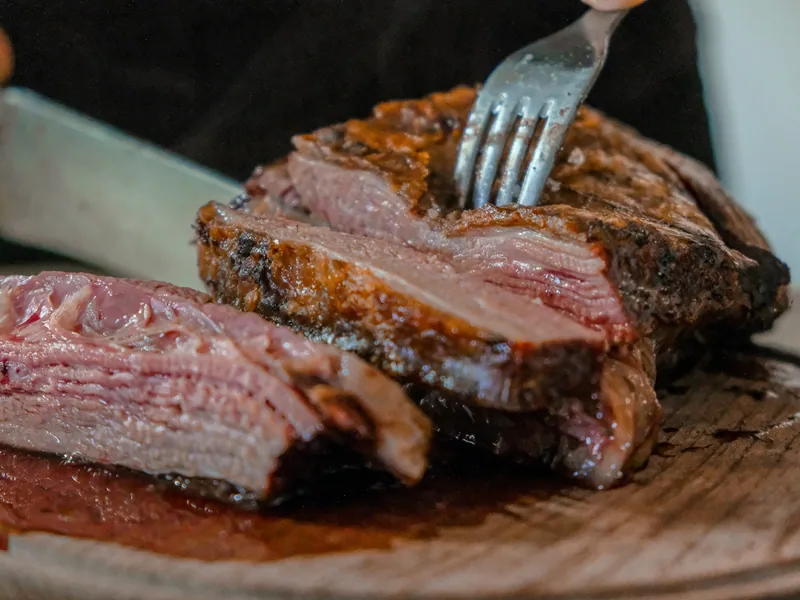
Filet Medallions
Three filets totalling 9oz, topped with Peppercorn or Portobello Mushroom sauce over seasoned rice. The sauce choice moves the calorie count between 880 and 970. It is the same cut as the Dallas Filet in a format that spreads it across the plate rather than concentrating it.
Fall-Off-The-Bone Ribs
2 items
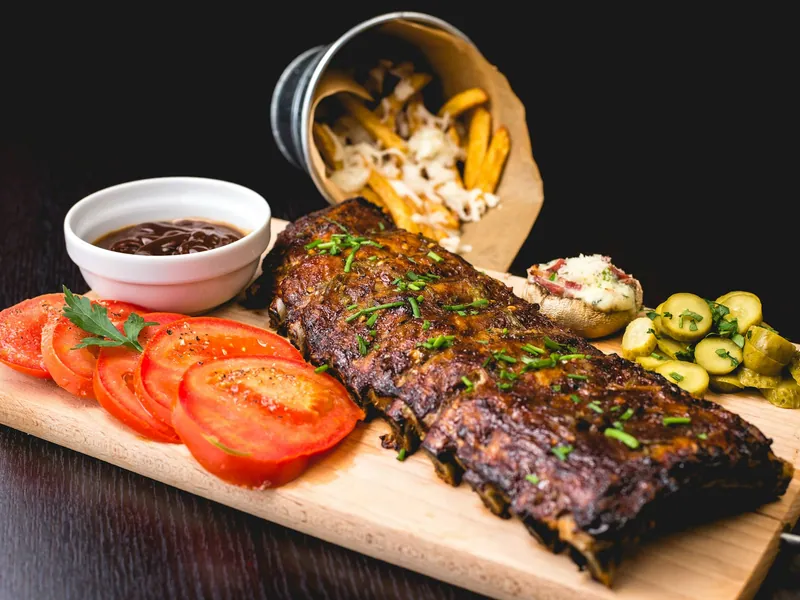
Half Slab Ribs
Slow-cooked ribs with a dry seasoning blend and the house BBQ sauce, served with two sides. The half slab at 900 calories is the sensible portion for one person alongside two sides, and it is the version most people should order rather than defaulting to the full.
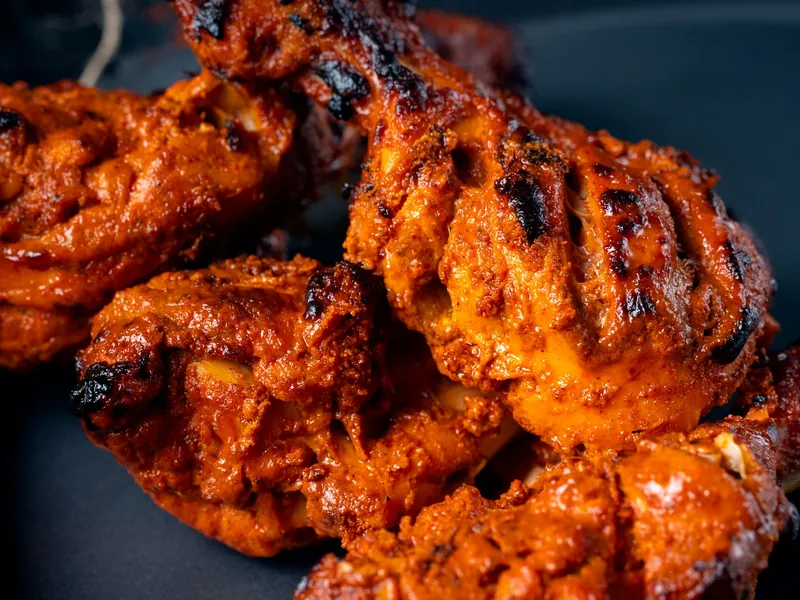
Full Slab Ribs
The full rack at 1,450 calories, plus whatever two sides you choose on top. It is genuinely a lot of food — comfortably shareable between two moderate appetites, particularly if one of you also orders a starter. At $5 more than the half slab it is the better value per rib, provided you finish it.
Texas Size Combos
12 items
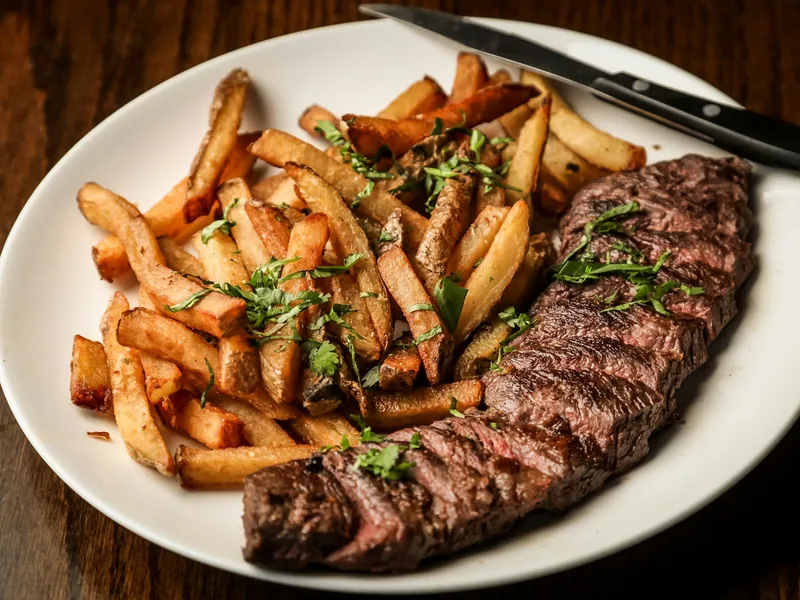
Sirloin 6 oz. & Grilled Shrimp
The lightest combo on the page at 610 calories, pairing the leanest steak with the lightest protein on the menu. If you want a surf-and-turf plate without the calorie load that usually comes with one, this is the specific order.
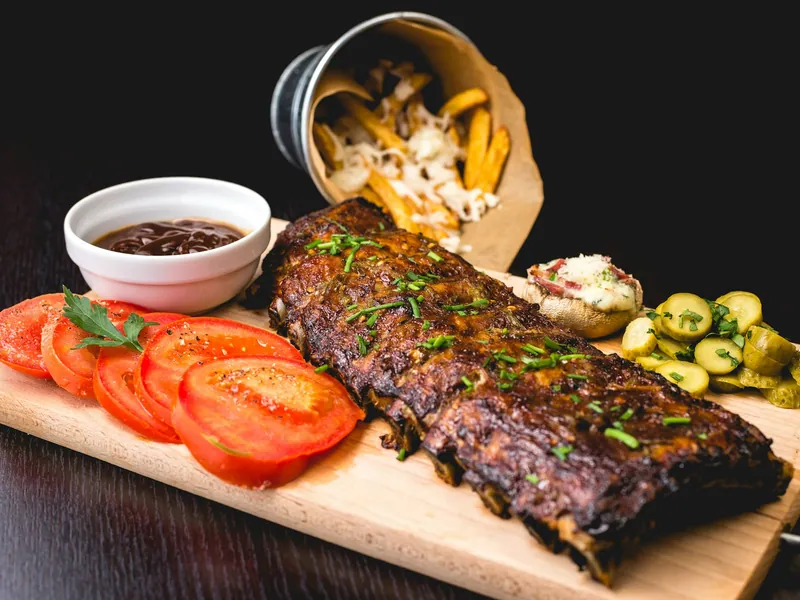
Sirloin 6 oz. & Ribs
Sirloin with a rib portion. At 800 calories it is a substantial plate, and it is the combo that most often gets ordered by people who could not decide between the steak page and the rib page.
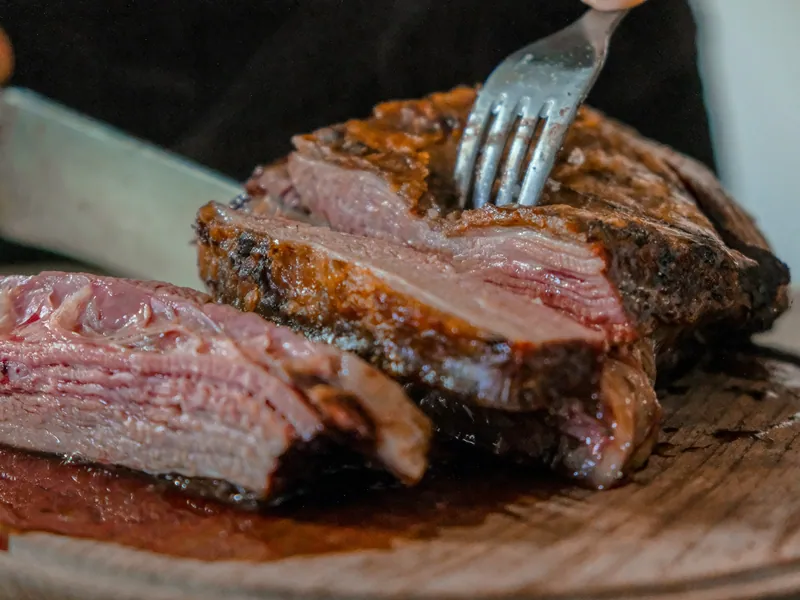
Sirloin 8 oz. & Grilled Shrimp
The step up from the 6oz version, adding 2oz of sirloin for $2 and 90 calories. Of all the size upgrades on the combo page, this is the one that costs least per additional ounce.
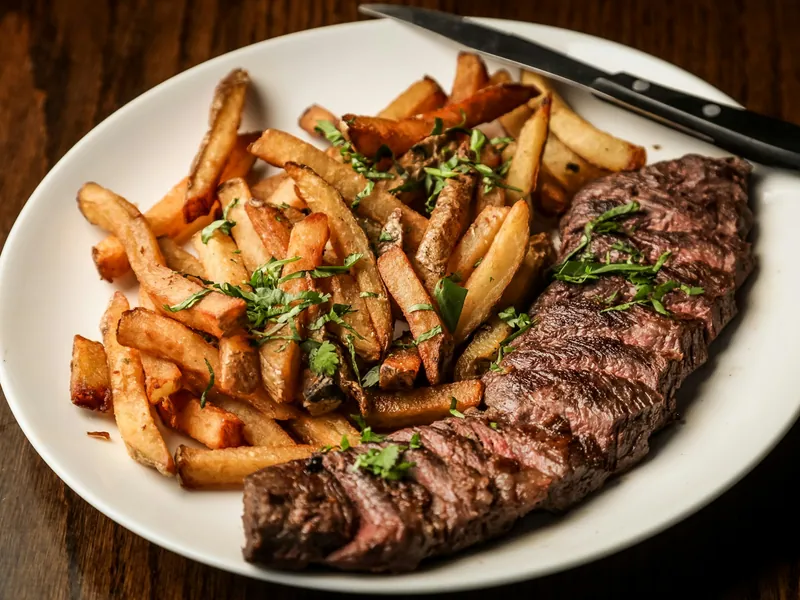
Sirloin 8 oz. & Ribs
The larger sirloin paired with ribs, at 890 calories before sides. This is the combo to order when you want the meal to be the event rather than fuel.
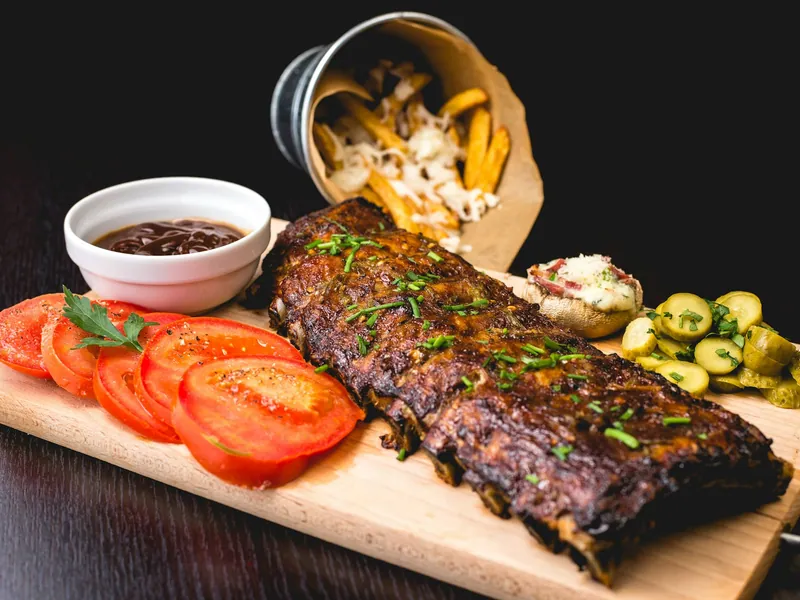
Ribeye 12 oz. & Grilled Shrimp
The marbled cut with shrimp, and at 1,320 calories one of the heavier plates on the menu before sides are added. The shrimp is doing very little to the total here — the ribeye accounts for the overwhelming majority.
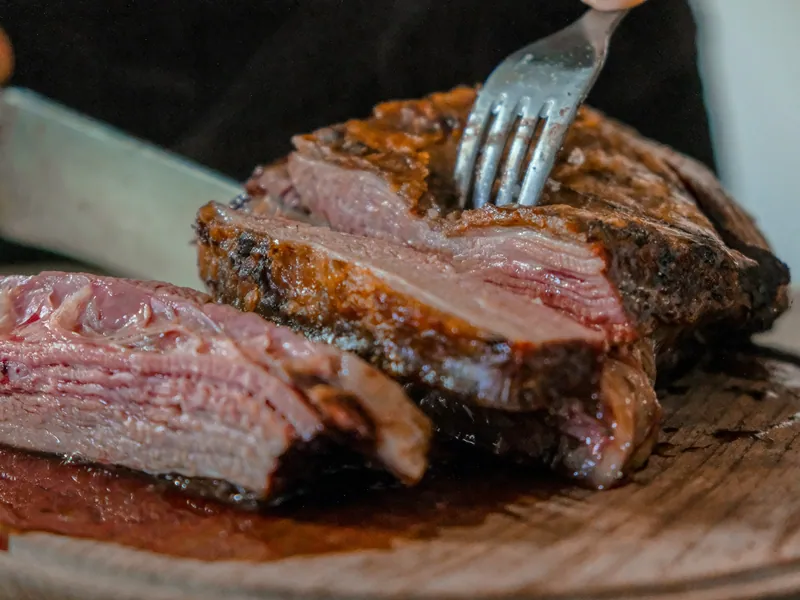
Ribeye 12 oz. & Ribs
The heaviest combo available at 1,510 calories and $29.99, second only to the Porterhouse in price. Two rich proteins on one plate with two sides still to come.
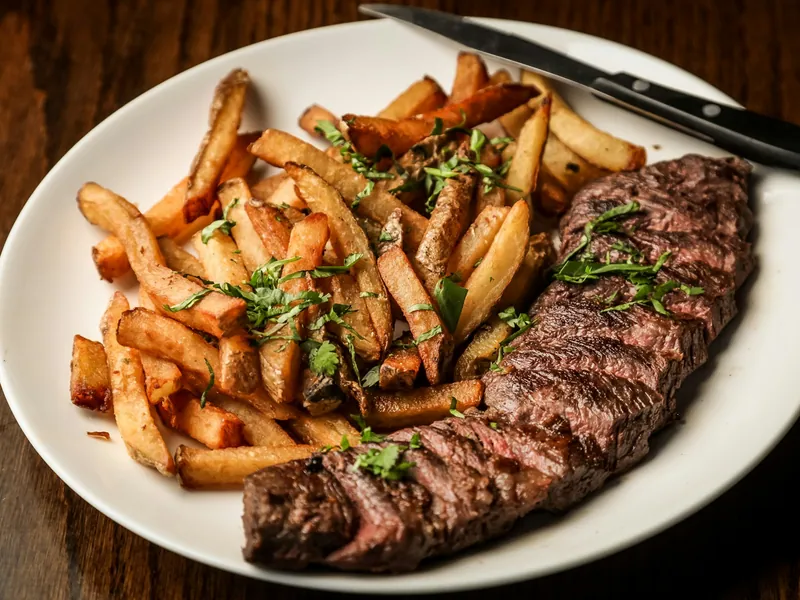
Chicken Critters & Sirloin 6 oz.
Fried chicken tenders with a 6oz sirloin, and unexpectedly one of the lighter combos at 520 calories. The sirloin is lean enough that it barely moves the number against the tenders alone.
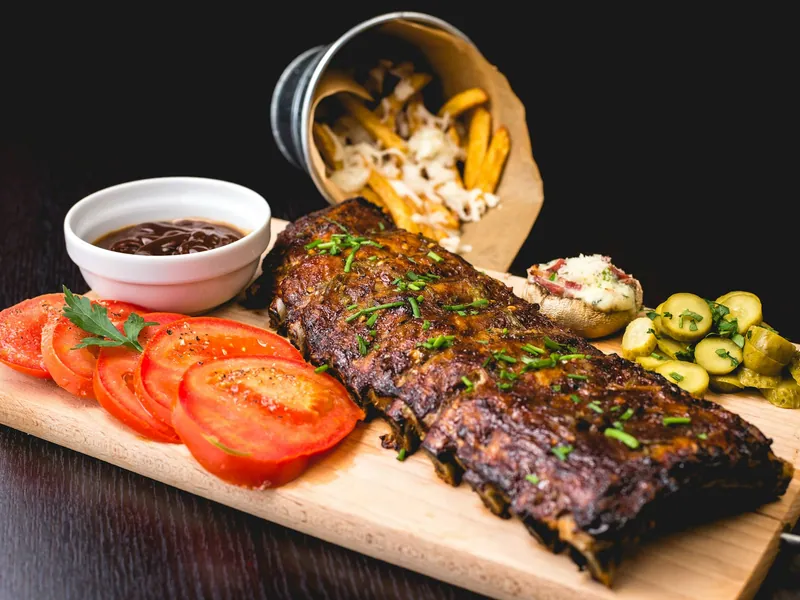
Chicken Critters & Ribs
The cheapest combo on the page at $17.99, pairing tenders with a rib portion. Good value if you are feeding a larger appetite without wanting to reach steak prices.
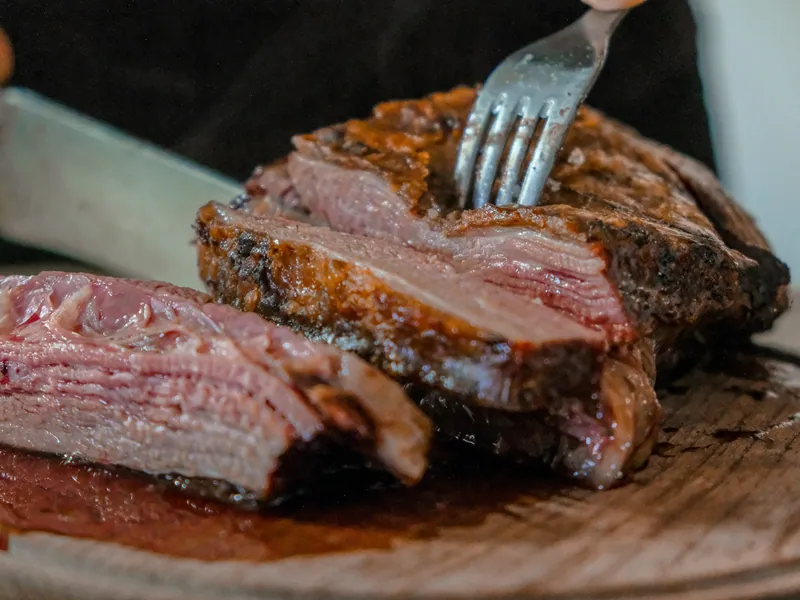
Grilled BBQ Chicken & Sirloin 6 oz.
Marinated BBQ chicken breast with a 6oz sirloin. At 590 calories it is the second-lightest combo and the best protein-per-calorie plate on the entire combo page.
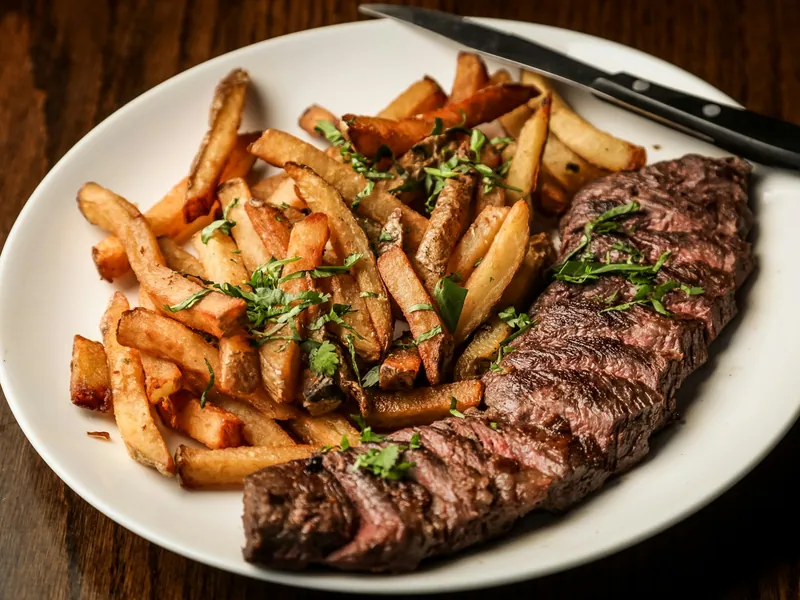
Grilled BBQ Chicken & Ribs
BBQ chicken with ribs — two BBQ-sauced proteins, which makes it the most one-note combo on the page. Worth ordering if BBQ is specifically what you came for.
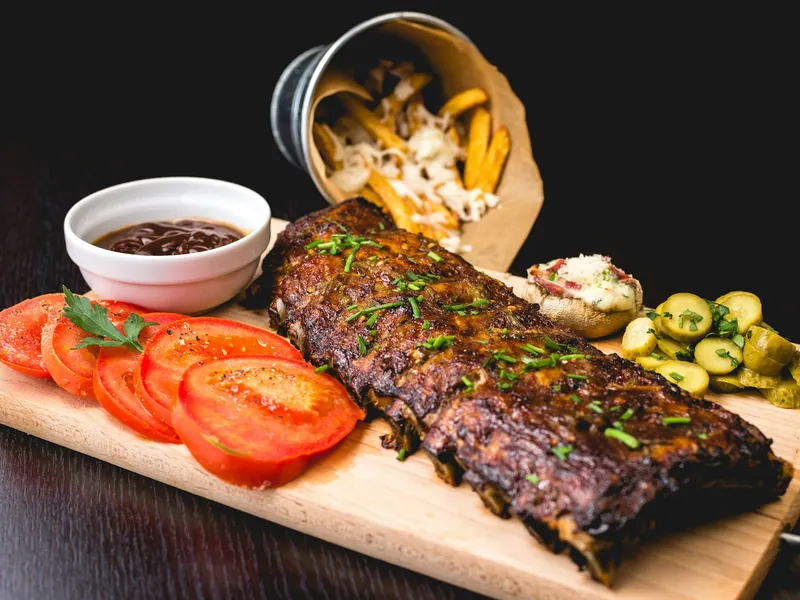
Filet 6 oz. & Grilled Shrimp
The premium light option: the tenderest cut with the lightest protein, at 630 calories for $26.99. You are paying substantially for tenderness rather than quantity.
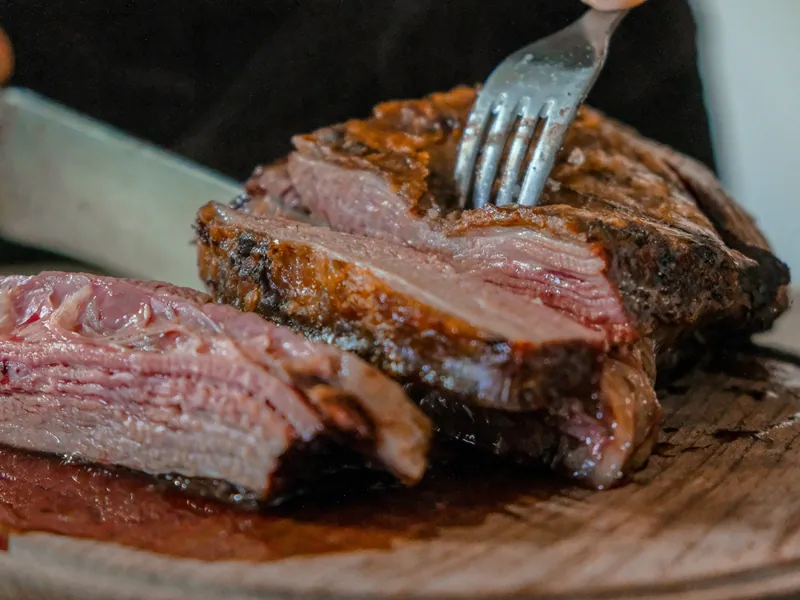
Filet 6 oz. & Ribs
Filet with a rib portion, at $28.99 the most expensive combo short of the ribeye pairing. The textural contrast between the two is the point.
Chicken Specialties
6 items
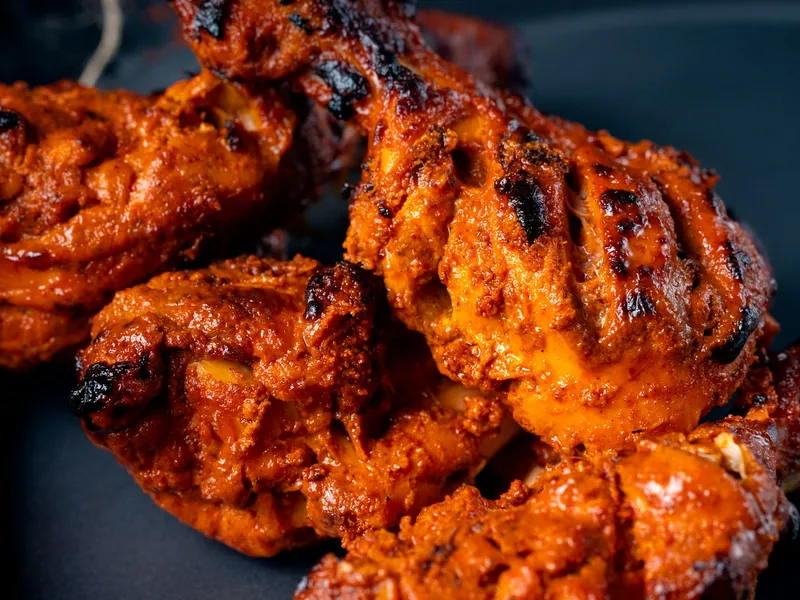
Grilled BBQ Chicken
A marinated half-pound breast basted in the house BBQ sauce. At 300 calories before sides it is the lightest entrée on the entire menu — lighter than several starters — which makes it the default order for anyone eating carefully without wanting a salad.
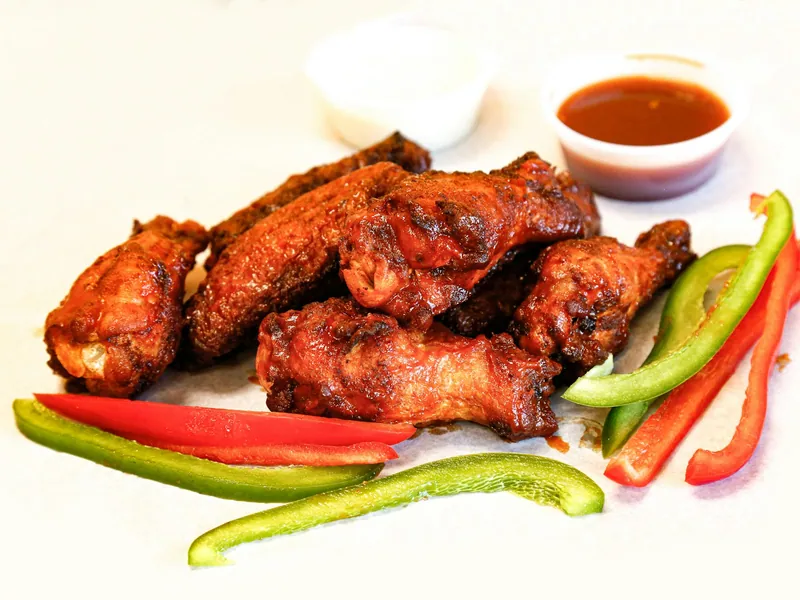
Herb Crusted Chicken
A boneless marinated breast seasoned with herbs, seared and finished with caramelised lemon. At 260 calories this is the single lowest-calorie main course available, and unlike most light options it is not a salad. If someone at the table is counting, this is the answer.
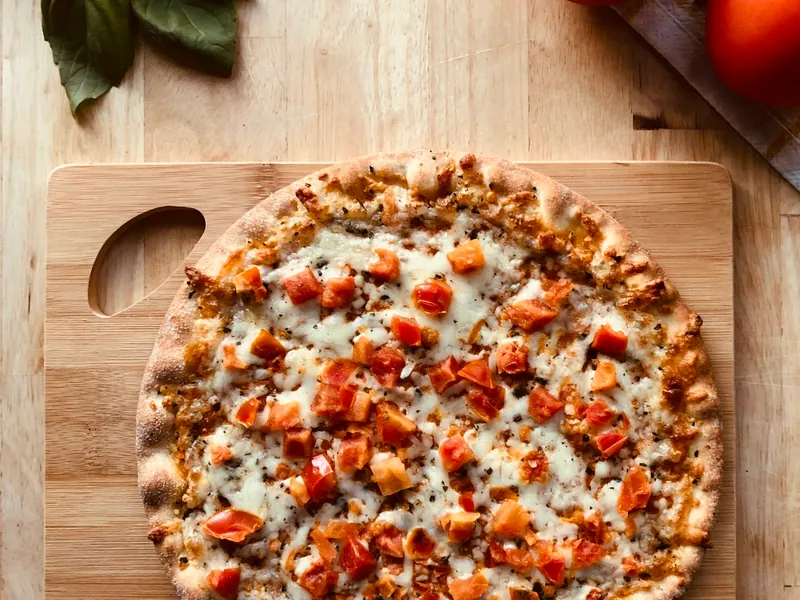
Country Fried Chicken
A hand-battered breast, golden-fried and topped with made-from-scratch cream gravy. The gravy is where most of the 780 calories sit — asking for it on the side puts you in control of a substantial share of the total.
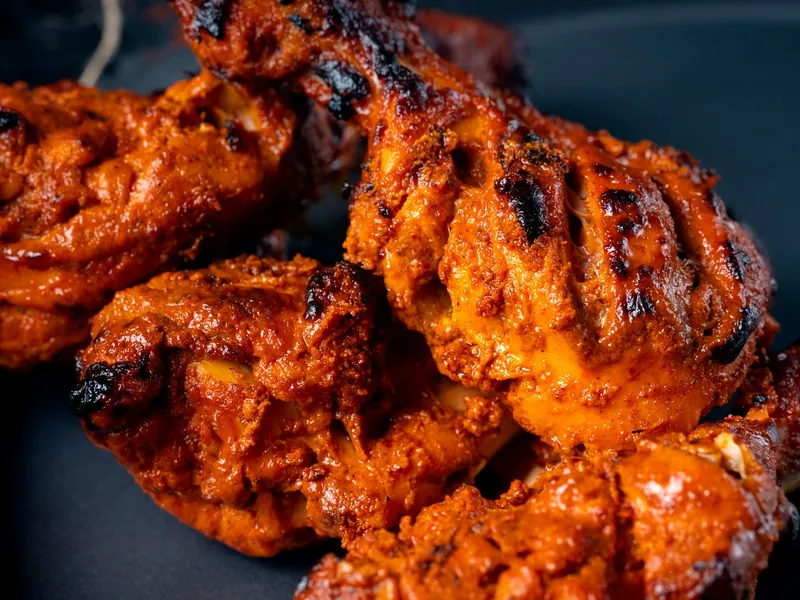
Chicken Critters
All-white-meat tenders in buttermilk batter, hand-breaded and fried, with a choice of BBQ, Honey Mustard or Ranch. The dipping sauce adds between 80 and 320 calories on top of the 480, which is a wider swing than most people expect from a dip.
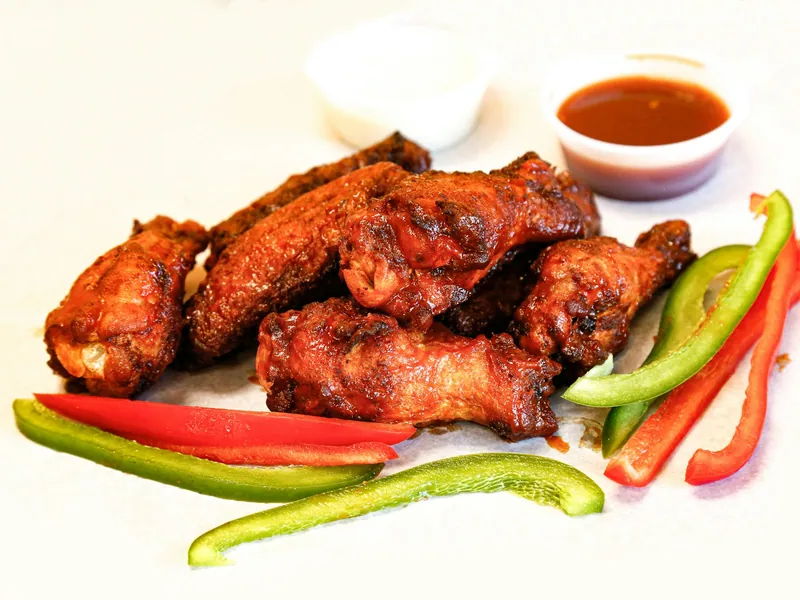
Smothered Chicken
A grilled marinated breast under sautéed onions and mushrooms with a choice of cream gravy or melted jack cheese. At 430 calories it is one of the lighter loaded entrées, and the jack cheese and cream gravy land in roughly the same place nutritionally.
Portobello Mushroom Chicken
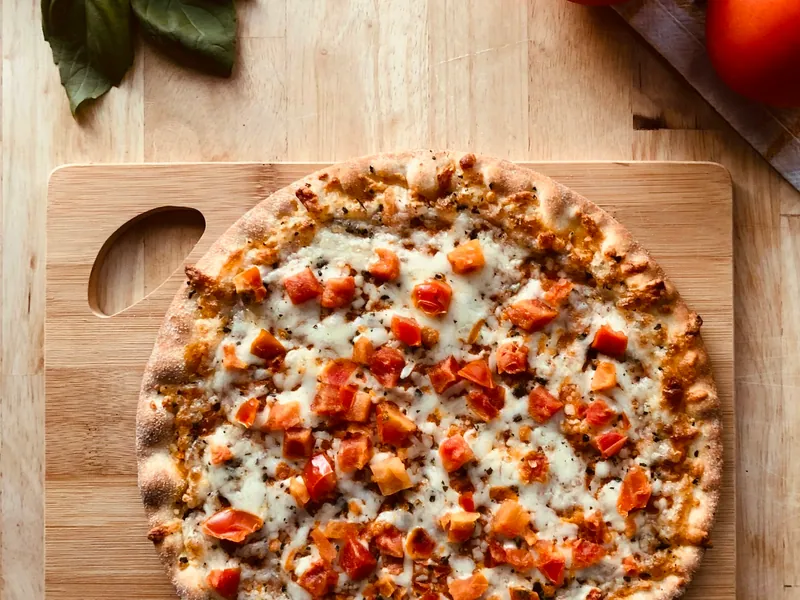
Grilled chicken under portobello mushroom sauce, melted jack and freshly grated parmesan. At $14.99 it is the most expensive chicken dish and at 430 calories one of the lighter ones — the mushroom sauce adds depth without much weight.
Country Dinners
5 items
Grilled Pork Chops
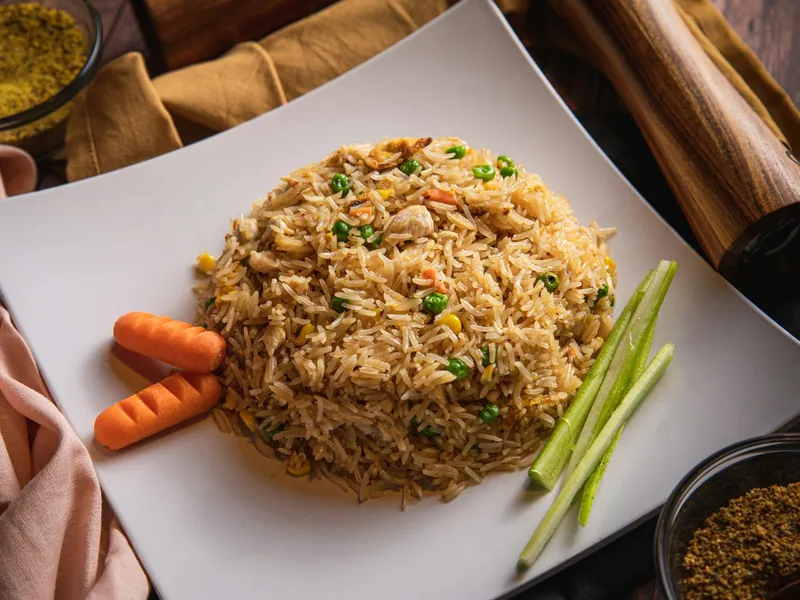
Boneless chops seasoned and served with peppercorn sauce, available single or double. The single at 440 calories is the lighter half of the pork page; the double at $16.49 and 730 calories is close to the calorie load of a mid-sized steak for less money.
Pulled Pork Dinner
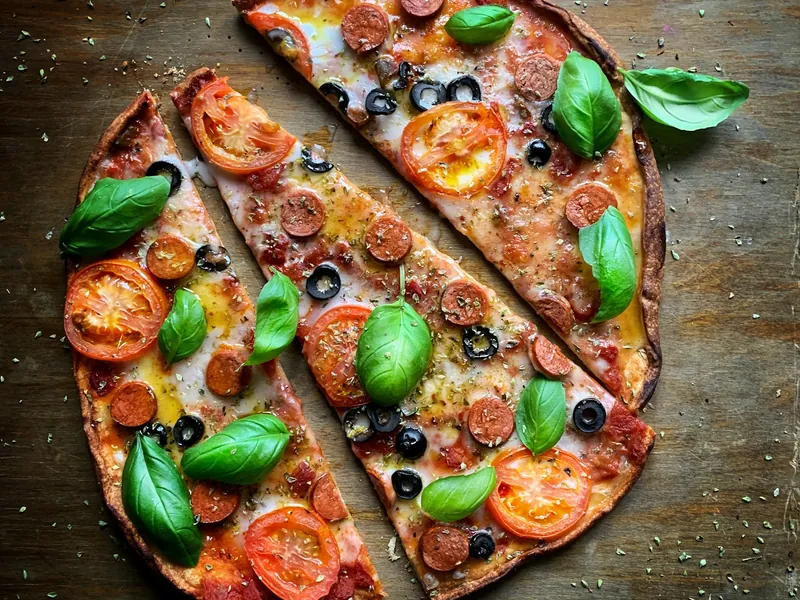
Slow-cooked BBQ pork with toasted fresh-baked bread. At 890 calories it is heavier than it looks, largely from the sauce and the bread rather than the meat itself.
Country Fried Sirloin
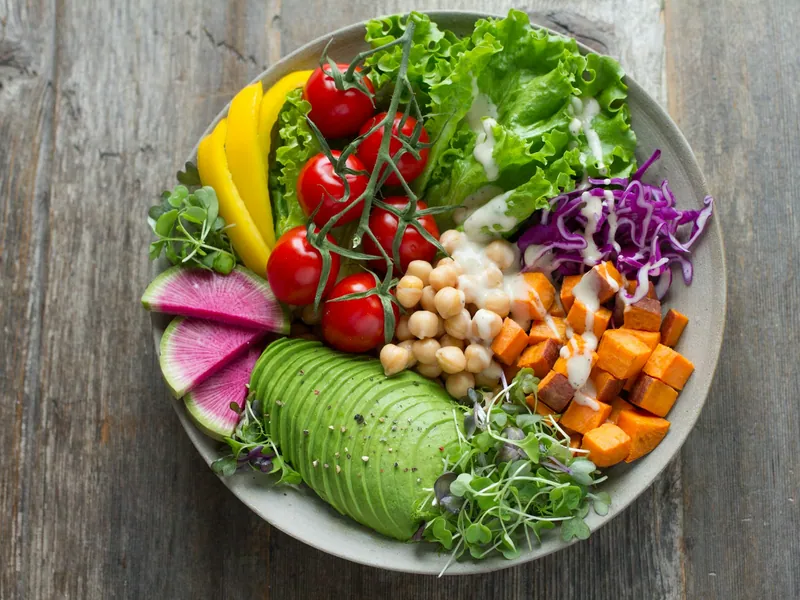
Hand-battered fresh-cut sirloin, fried crisp and topped with cream gravy. At 1,180 calories it is the heaviest non-steak entrée on the menu — the batter and gravy together add more than the beef does.
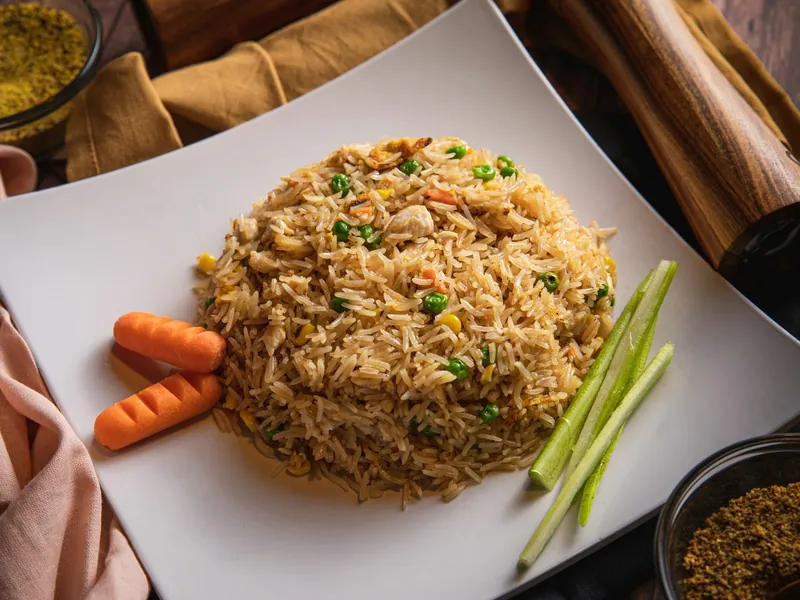
Beef Tips
Cuts of steak with sautéed mushrooms, onions, brown gravy and sour cream over rice or mashed potatoes, served with one side rather than two. The 960 to 1,060 calorie range depends on the base you choose.
Country Veg Plate
Choose four side items, one of which may be a salad. At $10.99 it is the cheapest full plate on the menu and the only genuinely vegetarian-friendly entrée. The 400 to 1,580 calorie range is the widest on the menu and depends entirely on whether you pick green beans or loaded potatoes.
Dockside Favorites
3 items
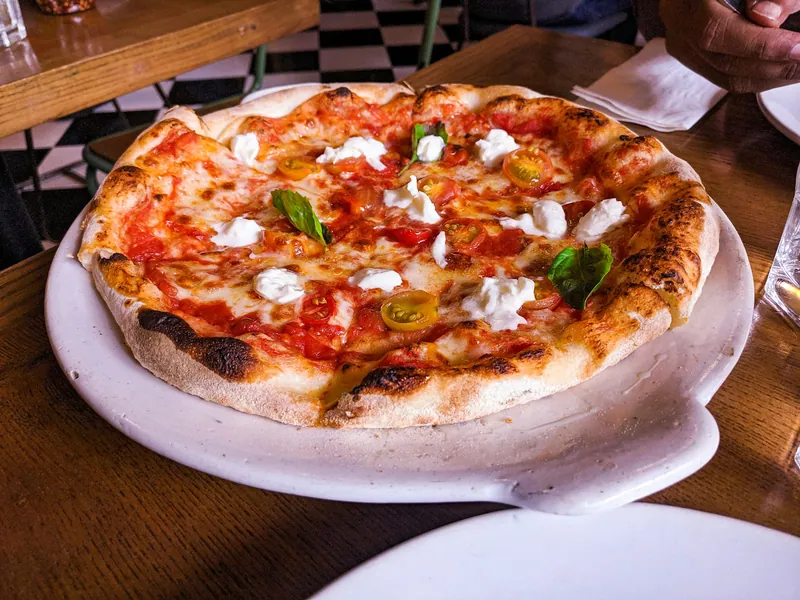
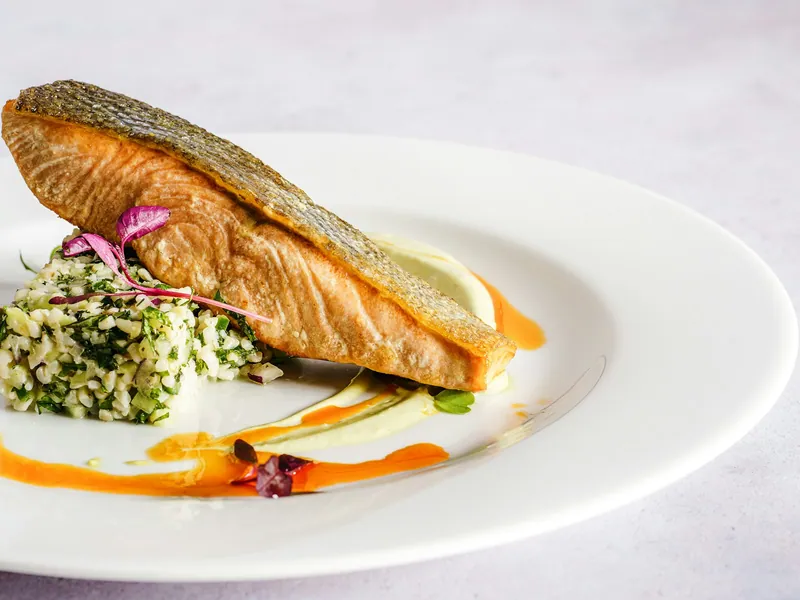
Grilled Salmon
A salmon fillet seasoned and topped with lemon pepper butter, in 5oz and 8oz portions. The 5oz at 410 calories is one of the lighter mains available, and salmon is the only entrée on the menu carrying meaningful omega-3s — worth knowing if that is a consideration.
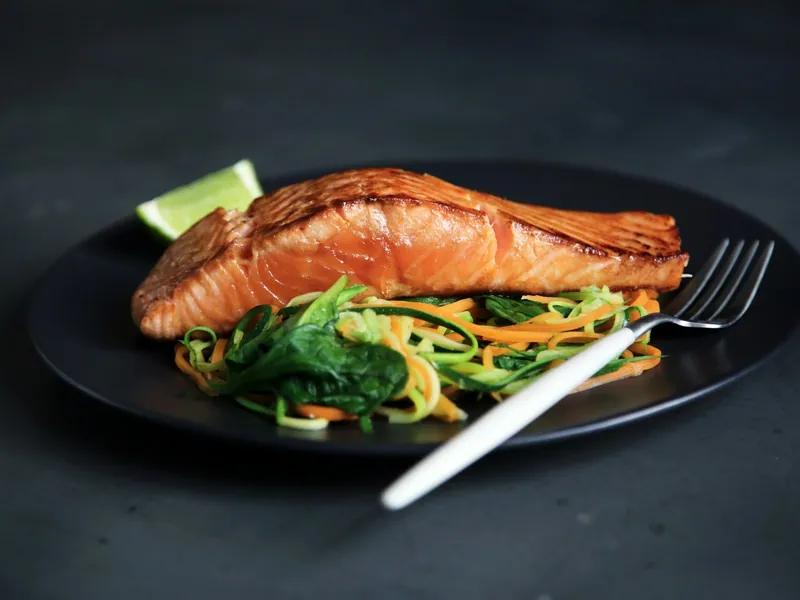
Grilled Shrimp Dinner
Large shrimp grilled with garlic lemon pepper butter over seasoned rice. At 670 calories the butter and rice account for more of the total than the shrimp does. It is the lightest seafood main if you swap the rice for a vegetable side.
Fried Catfish
U.S. farm-raised catfish breaded in southern cornmeal and fried, in three-piece and four-piece portions. The fourth piece adds $2 and 180 calories, which is one of the more honest upgrade ratios on the menu.
Burgers & Sandwiches
6 items
All-American Cheeseburger
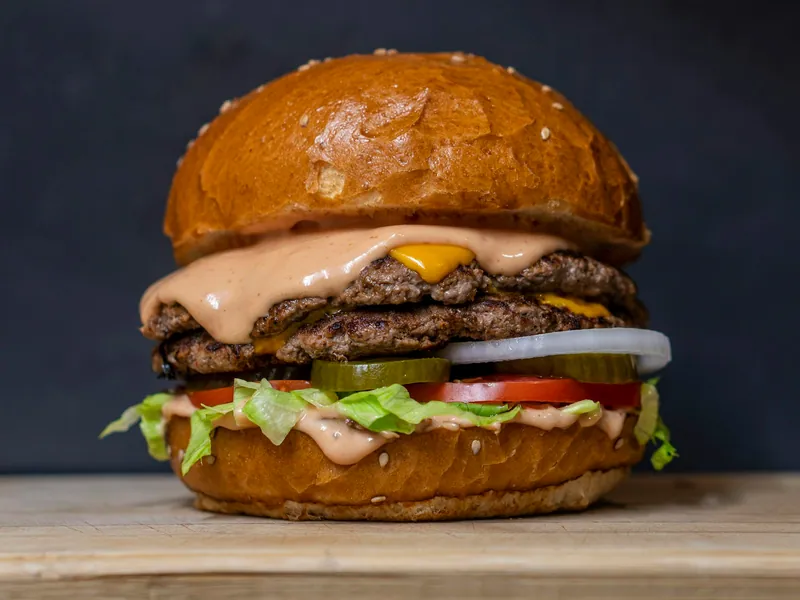
A half-pound Angus patty with American cheese, lettuce, tomato and onion on a Texas-sized bun, served with steak fries and a pickle spear. At 1,240 calories the fries account for around 360 of it — swapping them for a vegetable side is the single biggest change available on this page.
Bacon Cheeseburger
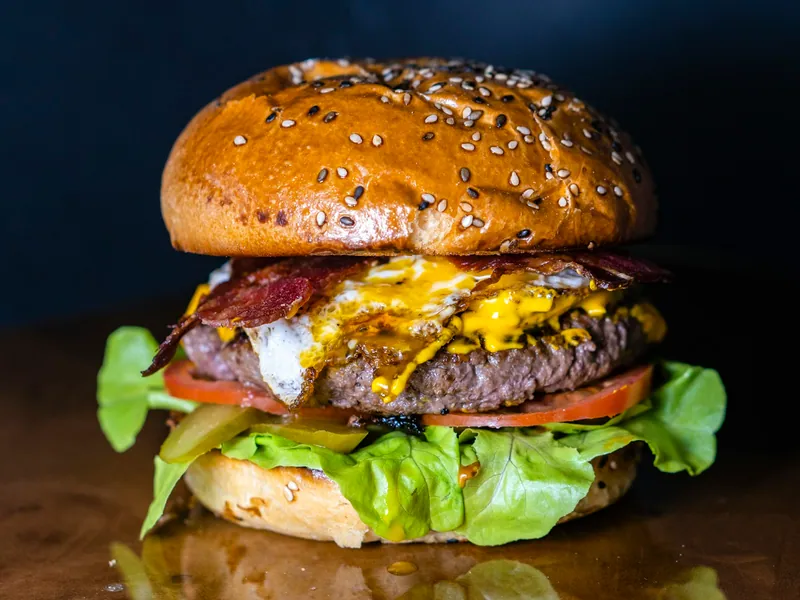
The All-American with crispy bacon added, which costs $1 and 100 calories. It is the most-ordered burger on the page and the bacon genuinely earns its place against the half-pound patty.
Smokehouse Burger
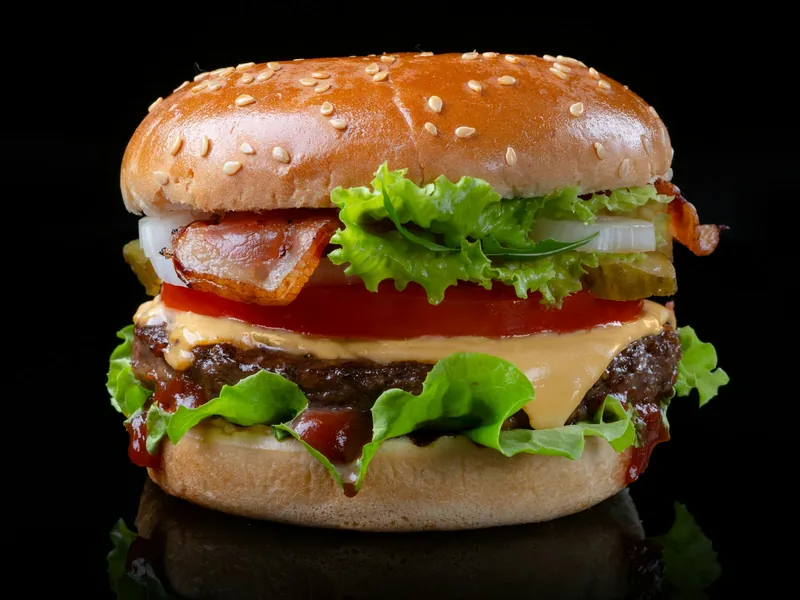
Sautéed mushrooms, onions, BBQ sauce, American and jack cheeses. At 1,440 calories it is the heaviest burger and one of the heaviest plates on the menu — two cheeses and BBQ sauce on a half-pound patty adds up quickly.
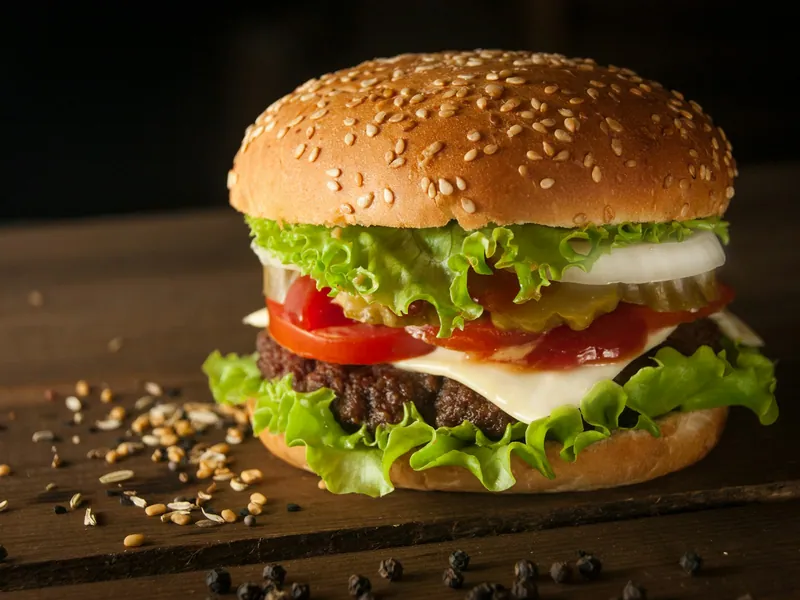
Pulled Pork Sandwich
Slow-cooked BBQ pulled pork on a Texas-sized bun with steak fries and a pickle. At $11.49 it ties for the cheapest sandwich, and at 1,230 calories it is barely lighter than the burgers despite having no patty — the bun, sauce and fries do the work.
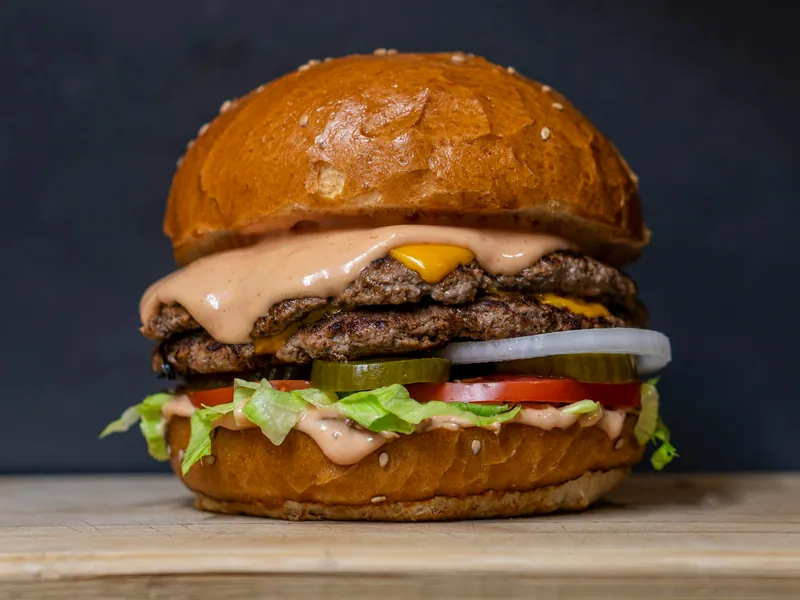
BBQ Chicken Sandwich
A marinated chicken breast basted in BBQ sauce with lettuce, tomato and onion. At 1,000 calories it is the lightest item on the sandwich page by a clear margin, and the only one under four figures.
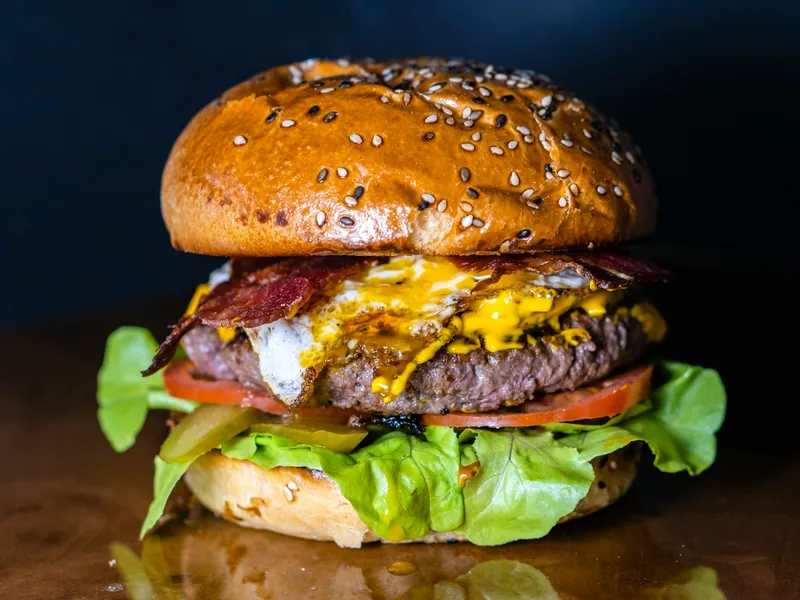
Mushroom Jack Chicken Sandwich
Grilled chicken with sautéed mushrooms, jack cheese, lettuce, tomato and onion. At 1,070 calories it sits between the BBQ chicken and the burgers — the jack cheese is most of the difference.
Salads
8 items
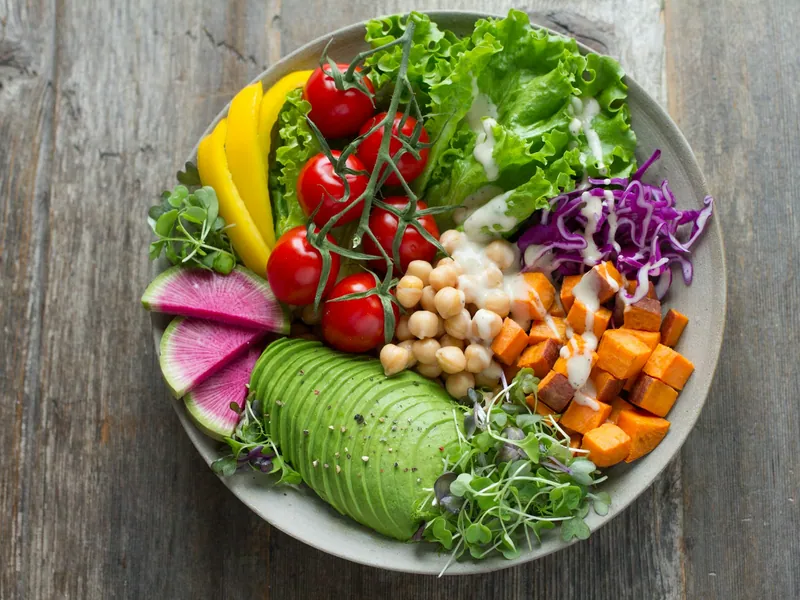
Grilled Chicken Salad
Cold greens with marinated chicken strips, jack cheese, egg, tomato, bacon, red onion and croutons. At 810 calories before dressing it is not the light option people assume a salad to be — the bacon, egg and cheese carry most of it, and dressing adds between 270 and 480 more.
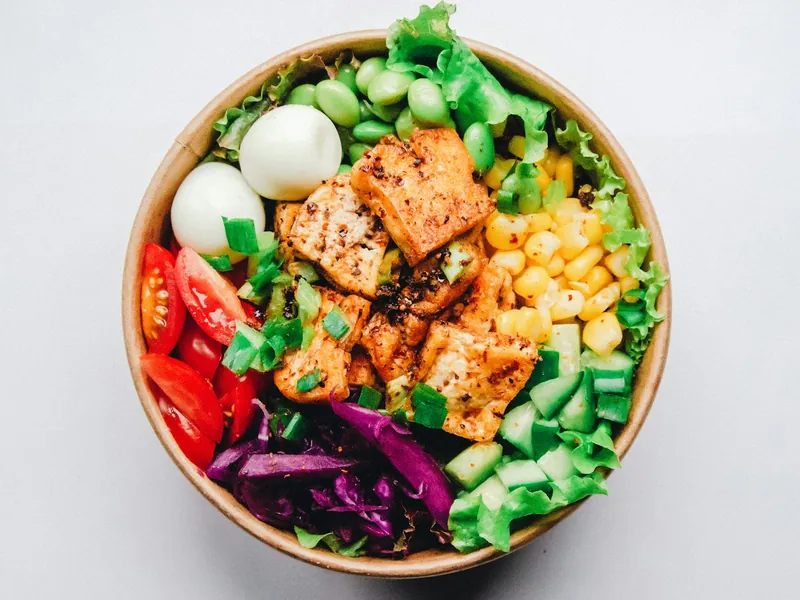
Grilled Salmon Salad
The same salad base with a 5oz salmon fillet in place of the chicken, for $2.50 more and 20 additional calories. On a per-calorie basis it is the better protein of the two.
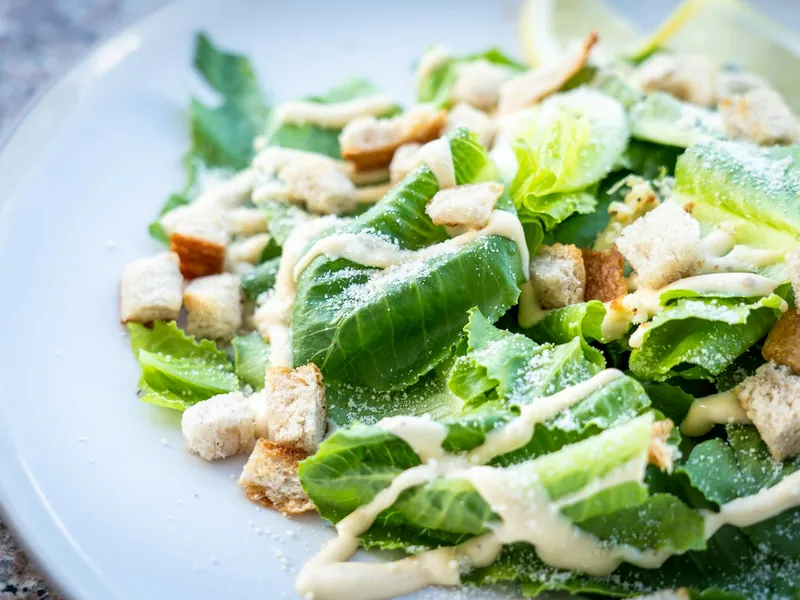
Chicken Caesar Salad
Grilled chicken over romaine hearts with parmesan, croutons and Caesar dressing. At 1,100 calories with the dressing included, this is the heaviest salad on the menu and heavier than most steak entrées before sides.
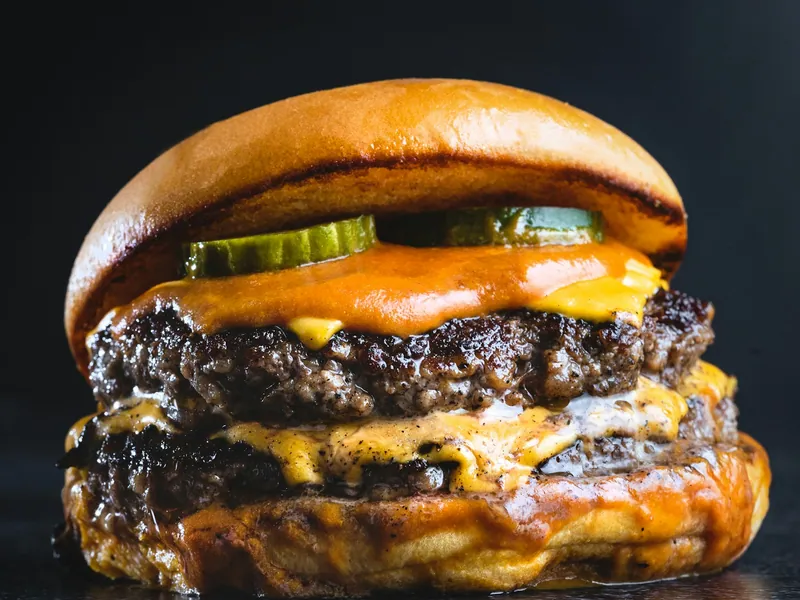
Salmon Caesar Salad
The Caesar with a 5oz salmon fillet. Practically identical in calories to the chicken version, so the choice is entirely about which protein you prefer.
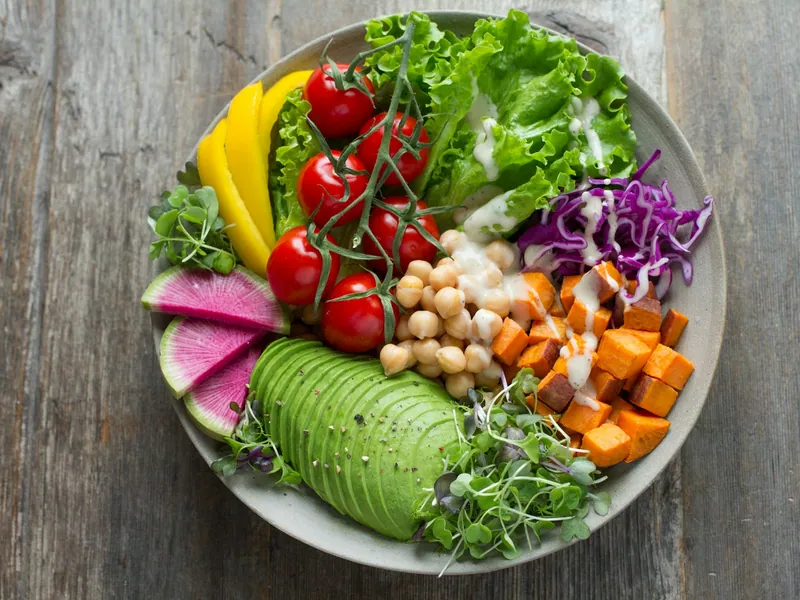
Chicken Critter Salad
Fried chicken tenders piled on cold greens with jack and cheddar, egg, tomato and bacon. Counterintuitively it is lighter than the grilled chicken salad at 690 calories, because the portion of greens and toppings is smaller relative to the protein.
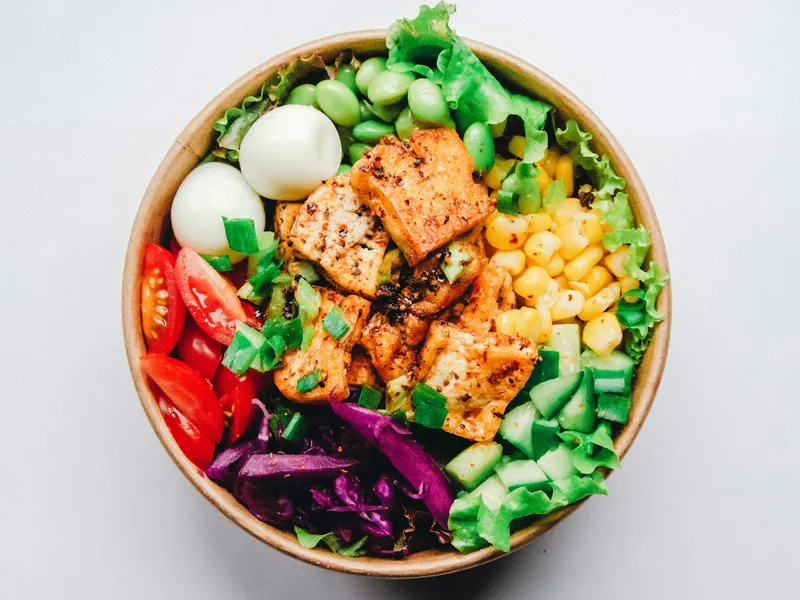
Steakhouse Filet Salad
Salad greens in Italian dressing topped with filet strips, bleu cheese crumbles, bacon bits, red onions, tomatoes and croutons, with creamy bleu cheese on the side. At $16.99 and 1,340 calories it is the most expensive and the heaviest salad — effectively a steak dinner served cold.
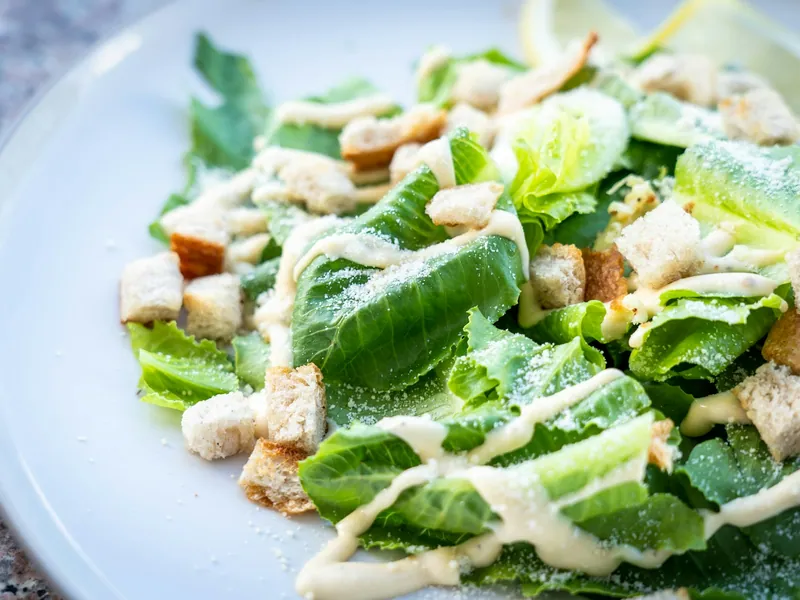
House Salad
Fresh greens with cheddar, tomato, eggs and croutons, in a side portion. At $4.99 and 230 calories before dressing it is one of the best-value items on the menu and the sensible way to add vegetables to a steak plate.
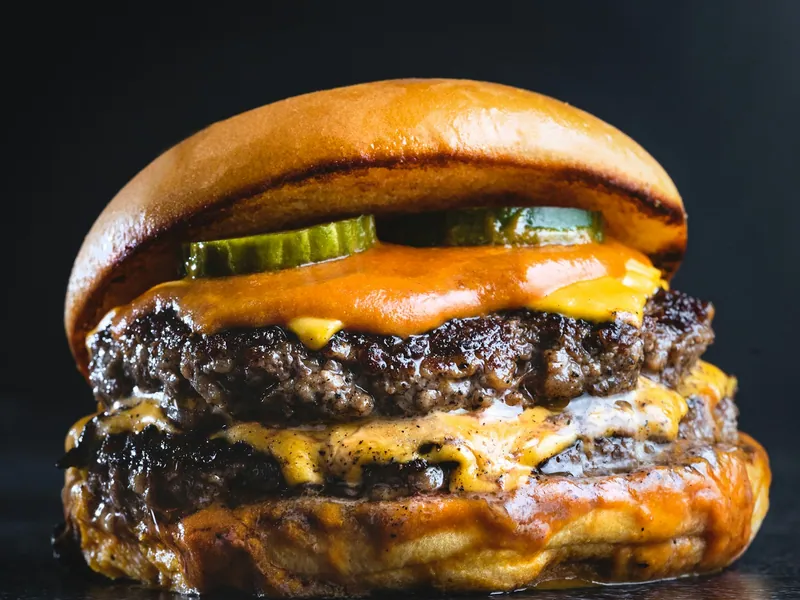
Caesar Salad
Romaine hearts with parmesan and made-from-scratch croutons in the house Caesar dressing. At 440 calories it is nearly double the House Salad for the same price, almost entirely because of the dressing.
Sides & Extras
12 items
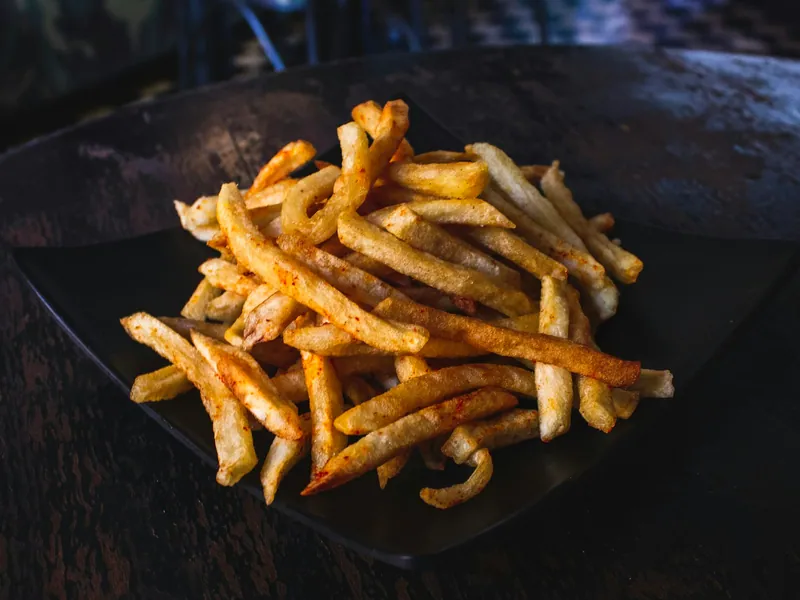
Applesauce
The lightest side on the menu at 110 calories, and one of the few that is genuinely refreshing against a rich steak plate. Also the default choice for children who will not eat vegetables.
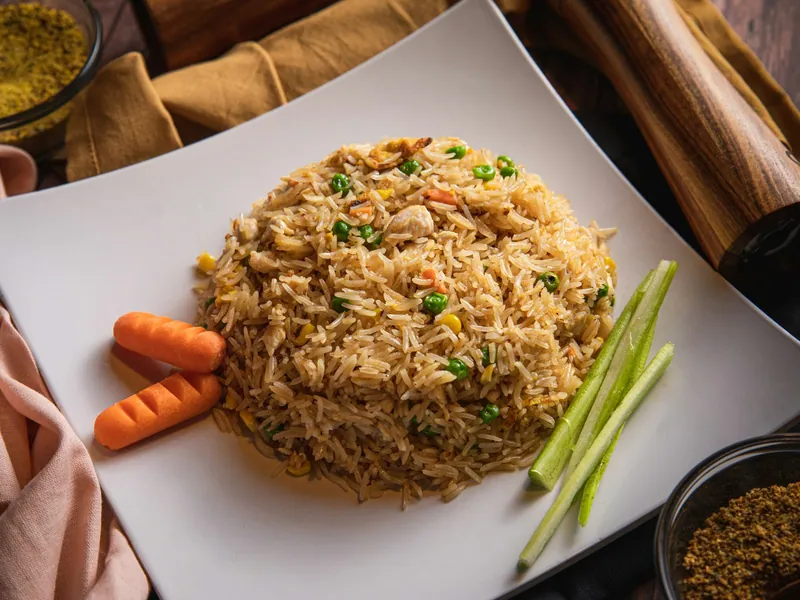
Baked Potato
A whole baked potato, or loaded with cheese, bacon and sour cream for $1.29 more and 150 additional calories. The plain version is one of the better-value sides; loaded, it approaches a small meal.
Buttered Corn
Sweetcorn in butter. At 190 calories it sits in the middle of the side list and is the most reliably child-friendly vegetable on the menu.
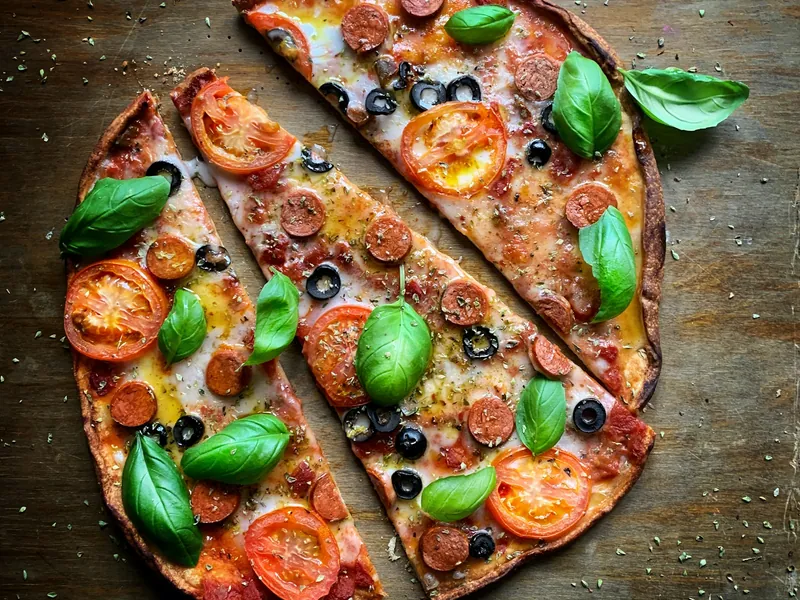
Fresh Vegetables
A seasonal vegetable medley at 190 calories — the same as buttered corn but with more variety and, for most people, more satiety.
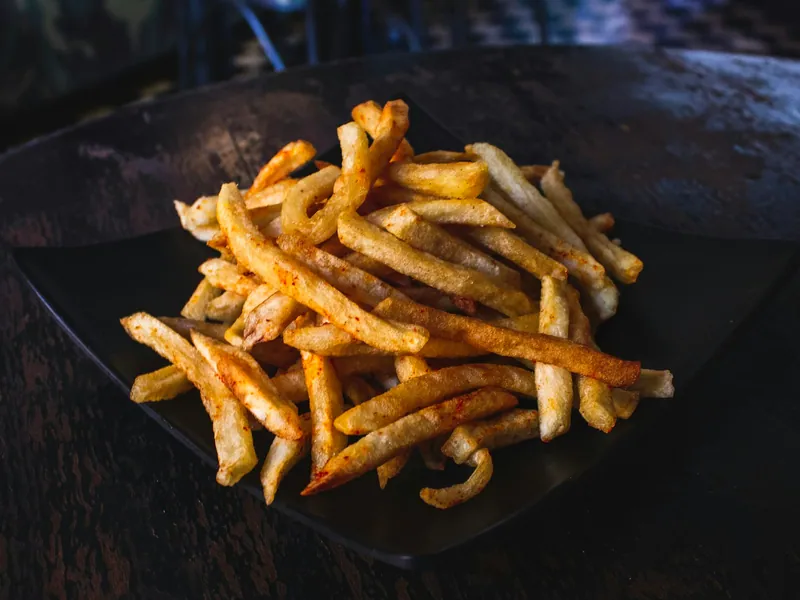
Green Beans
At 100 calories the lightest vegetable side available. Paired with a 6oz sirloin it produces one of the lowest-calorie complete plates the menu allows.
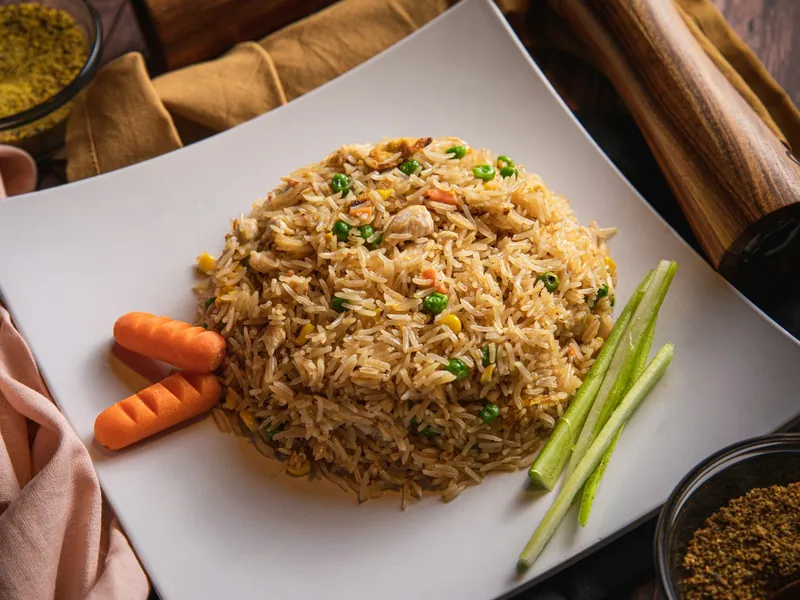
Mashed Potatoes
Mashed potato, or loaded for $1.29 more and 150 additional calories. The plain version is the most-ordered side on the menu and the safest default.
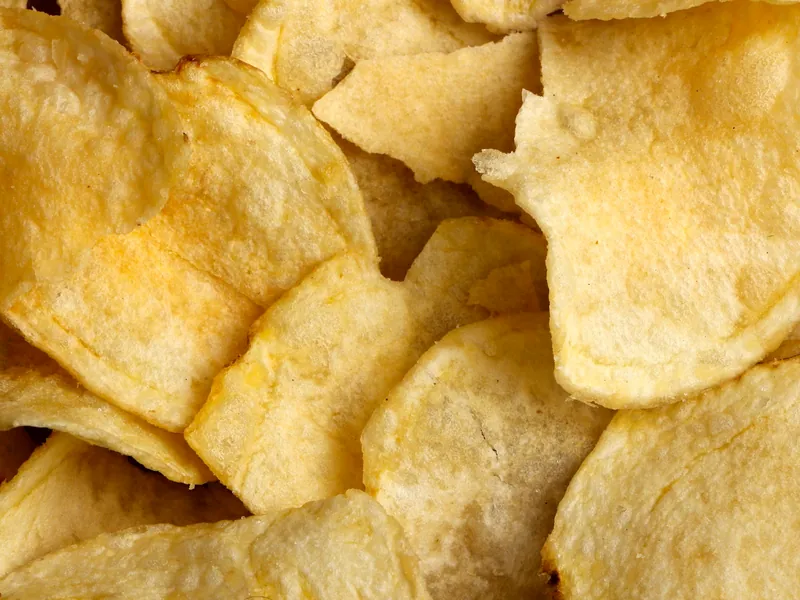
Seasoned Rice
Seasoned rice at 360 calories, which makes it one of the heavier sides despite reading as a lighter option than potatoes. It is the base for several entrées, so ordering it alongside one of those doubles up.
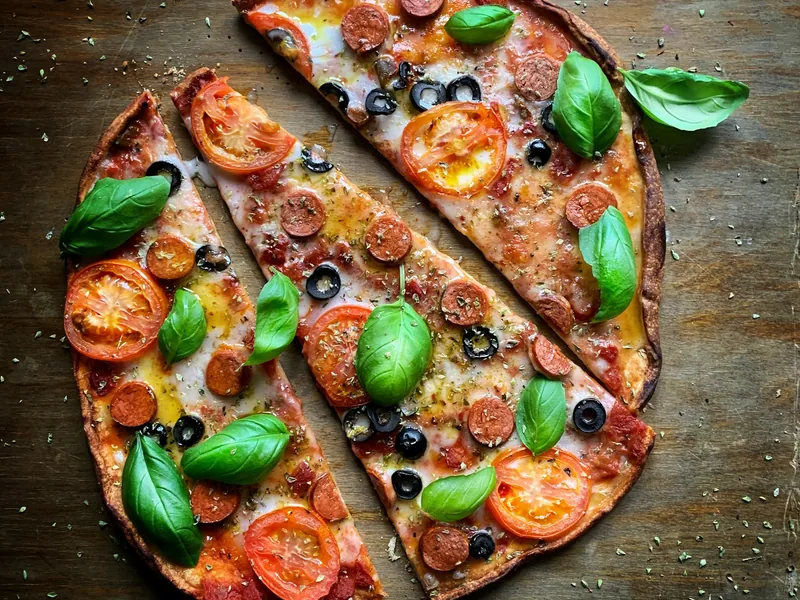
Steak Fries
Thick-cut fries, or loaded for $1.29 more and 150 additional calories. They come as standard with the burgers and sandwiches, where they account for 360 of those plates' totals.
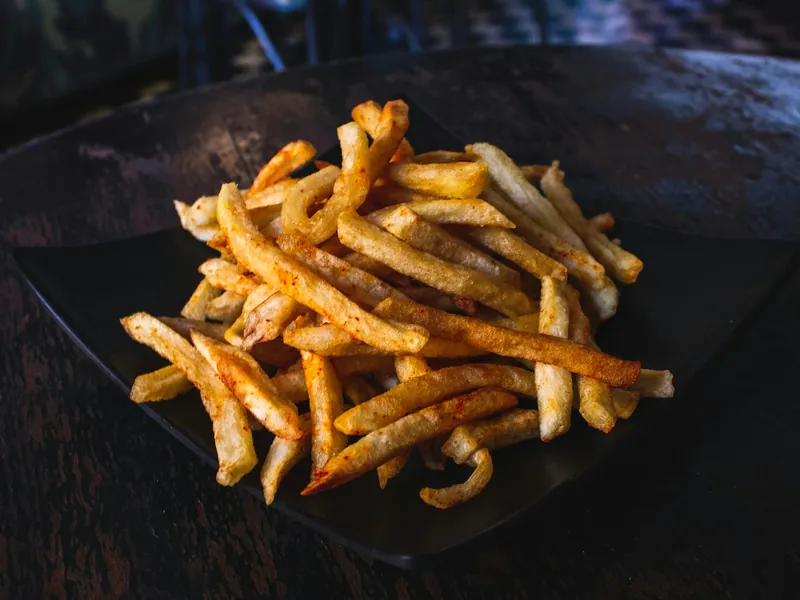
Sweet Potato
A whole baked sweet potato, or loaded for $1.29 and 390 additional calories — the largest loaded upcharge on the menu in calorie terms, taking it to 740. Plain, it is a solid alternative to the baked potato.
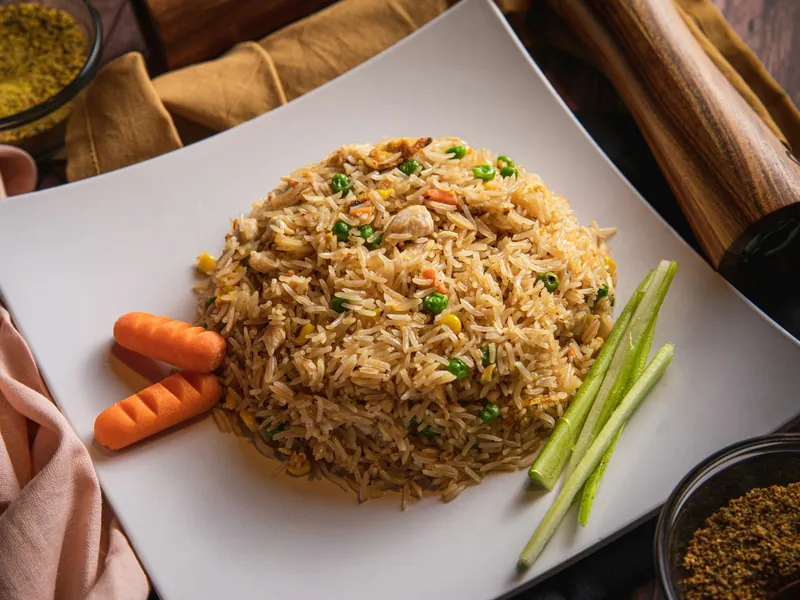
Texas Red Chili (Cup)
A cup of the made-from-scratch chili with cheddar and onions, available as a side. At $3.99 it is the priciest side but effectively a small starter.
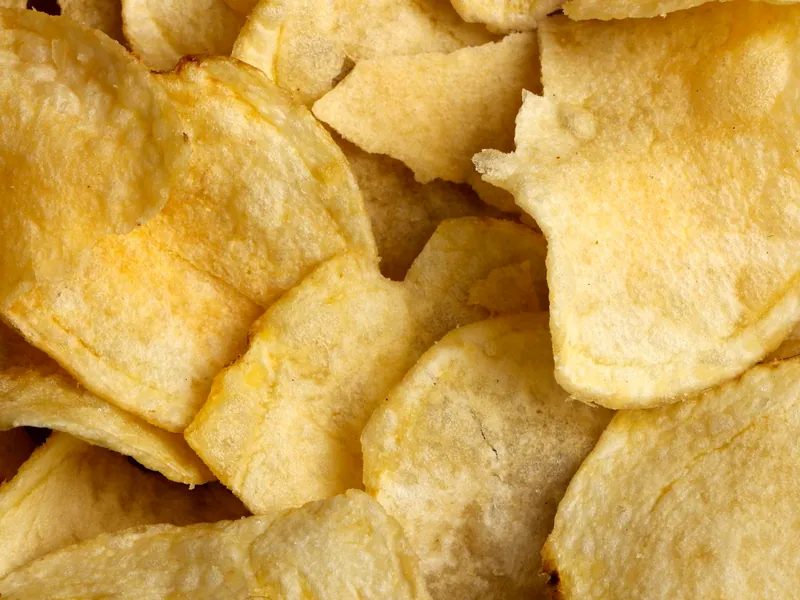
Sautéed Onions
Sautéed onions as a side, or added to a steak through the Smother Your Steak option for $2.29.
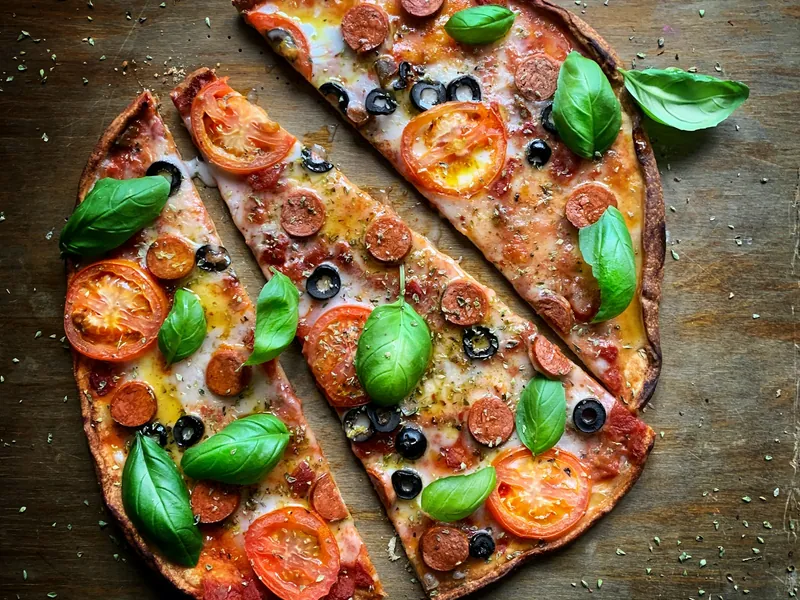
Sautéed Mushrooms
Sautéed mushrooms at 120 calories, the second-lightest side available and the most common steak topping.
Desserts
3 items
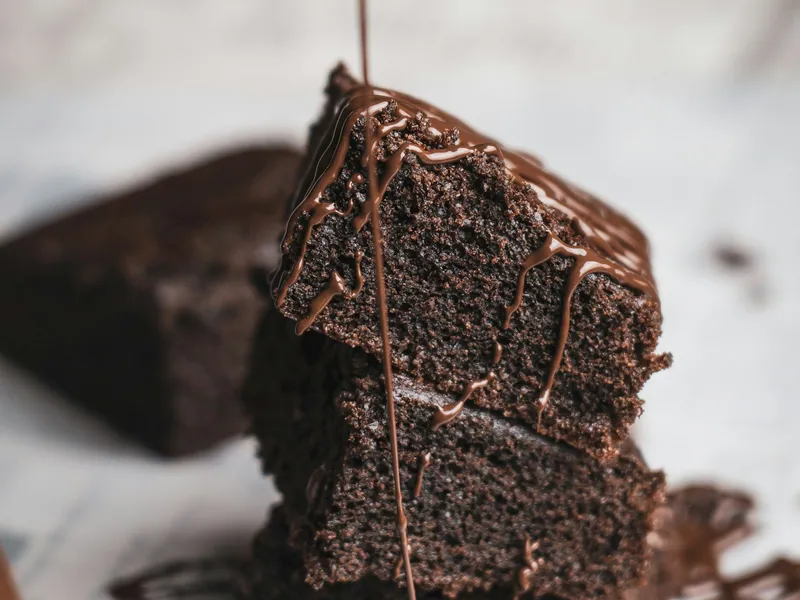
Granny's Apple Classic
A baked apple dessert at 1,110 calories — the lightest of the three desserts, which tells you something about the section. Comfortably shareable between two after a full plate.
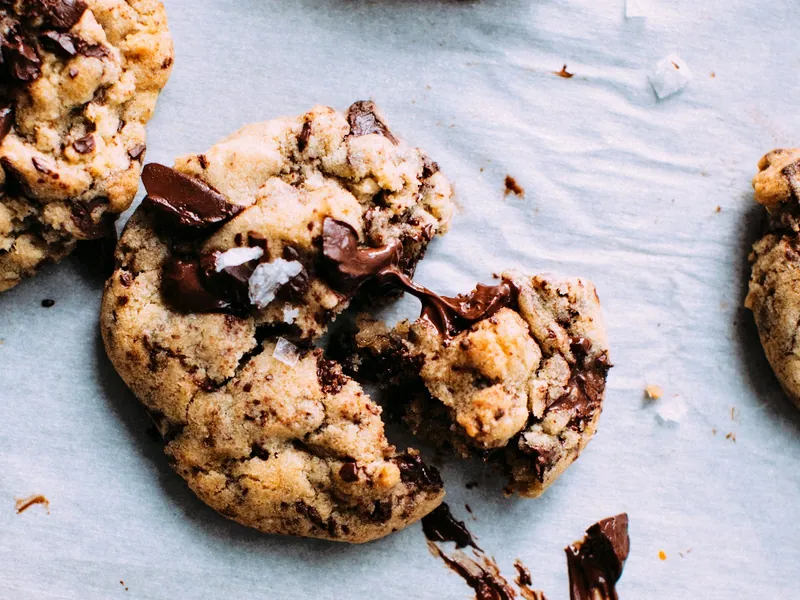
Strawberry Cheesecake
At 800 calories this is the lightest dessert on the menu by a clear margin, roughly 300 fewer than the apple and 400 fewer than the brownie. If you want dessert without committing to four figures, this is the one.
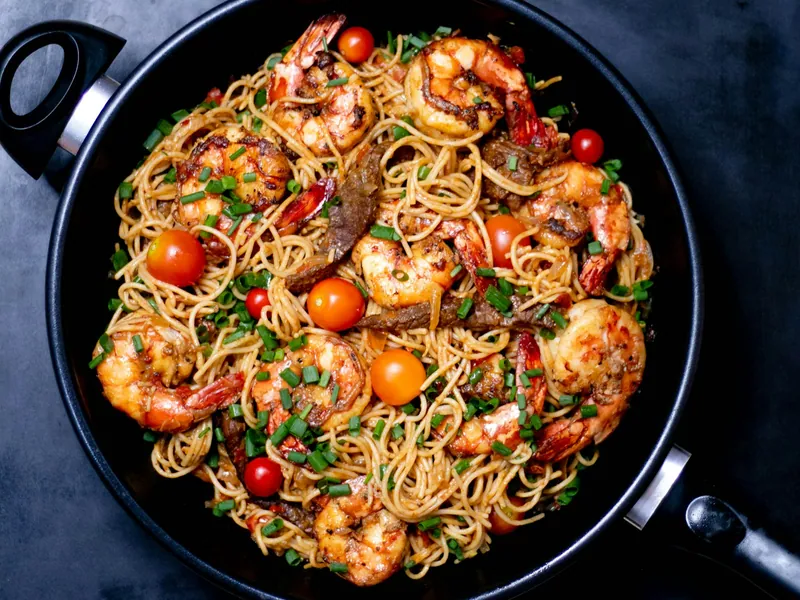
Big Ol' Brownie
The heaviest dessert at 1,200 calories, which is more than most entrées on the menu before sides. The name is accurate and the portion is designed for sharing, whatever anyone at the table claims.
Kids & Ranger Meals
9 items
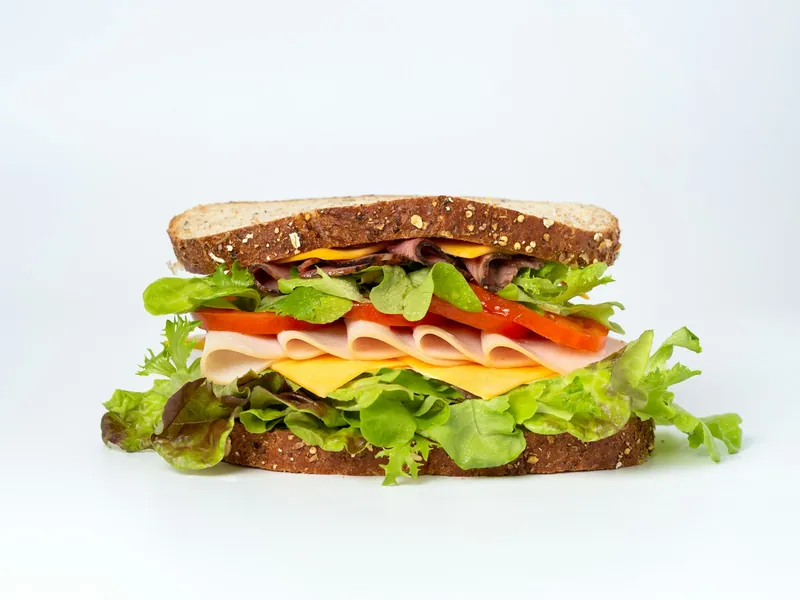
All-Beef Hot Dog
A kids meal with a soft drink, juice or milk and one side. At $4.99 it ties for the cheapest meal on the menu. Chili and cheese can be added for a small charge and 70 calories.
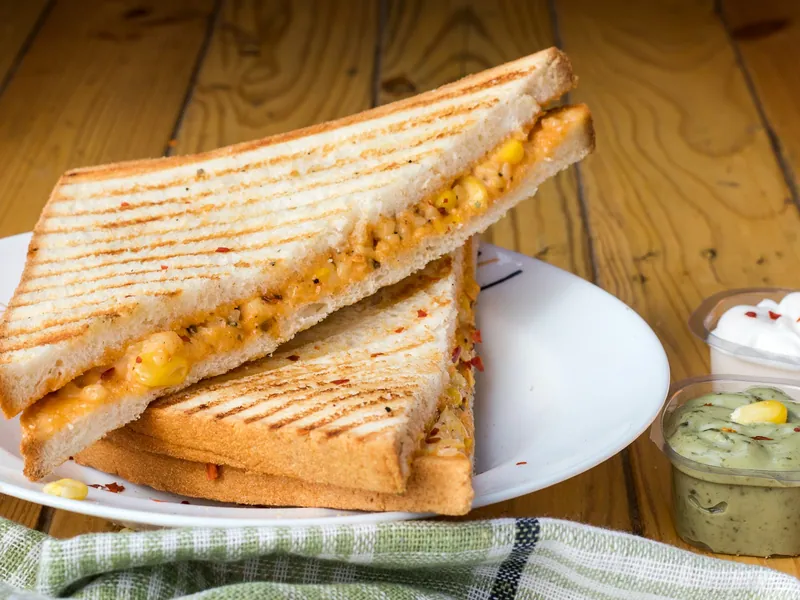
Macaroni and Cheese
The other $4.99 kids option and, at 300 calories before the side and drink, the lightest thing on the kids page.
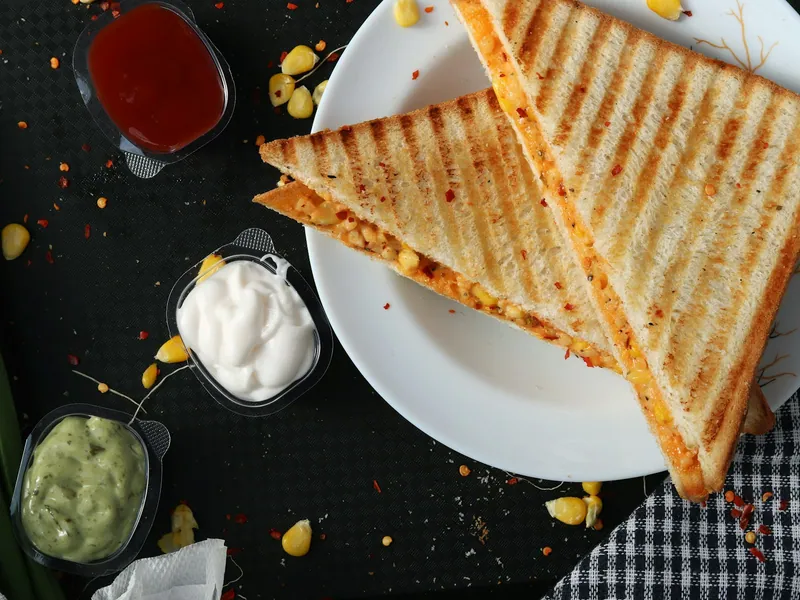
Mini-Cheeseburgers
Two small burgers on fresh-baked bread with a side and a drink. At 670 calories it is the heaviest of the kids meals and closer to an adult portion than the price suggests.
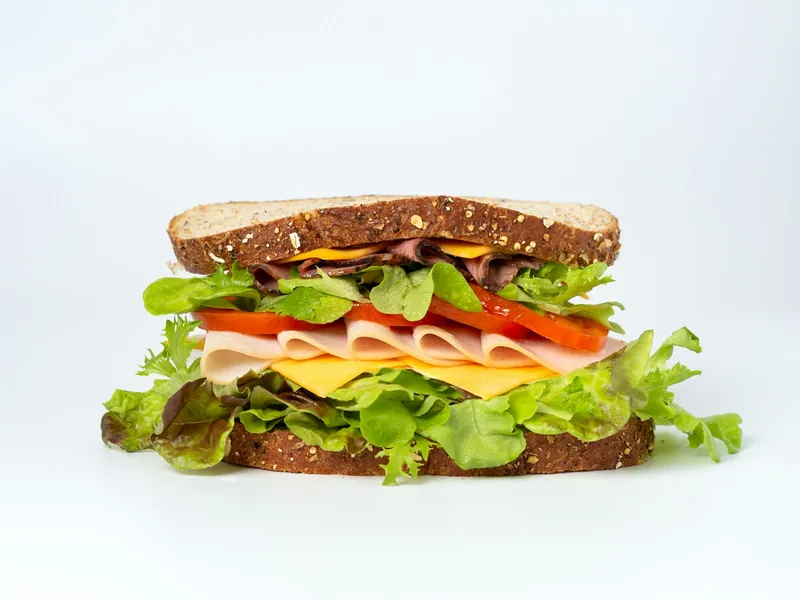
Jr. Chicken Tenders
All-white-meat breaded and fried tenders in a kids portion, with a side and a drink.
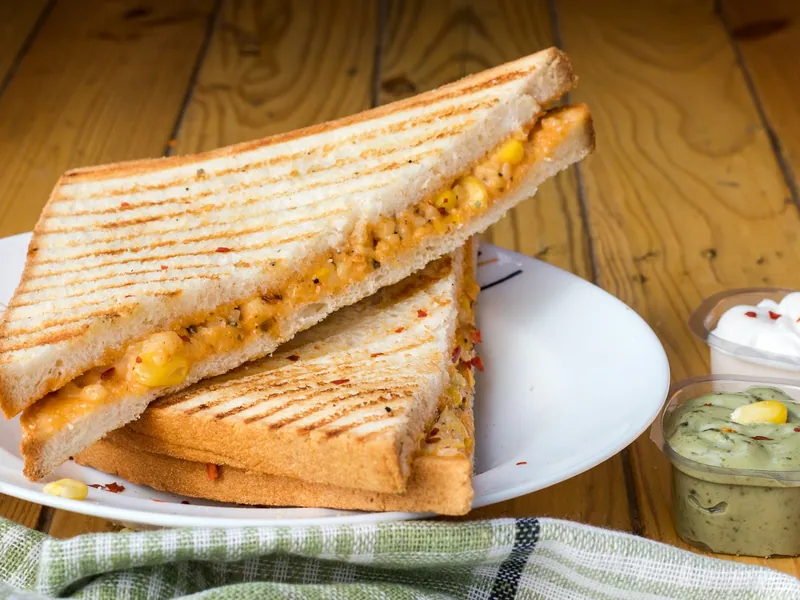
Grilled Chicken
Strips of boneless grilled chicken at 110 calories before the side and drink — the lightest protein on the entire menu and a genuinely useful option for a child who does not want fried food.
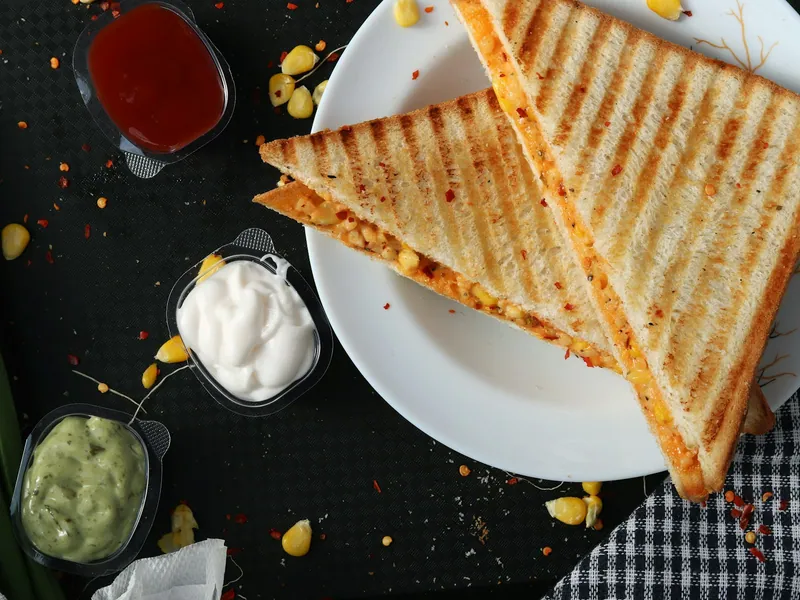
Lil' Dillo Steak Bites
Grilled steak pieces in a kids portion. At $7.99 it is the most expensive kids meal, and at 170 calories one of the lightest.
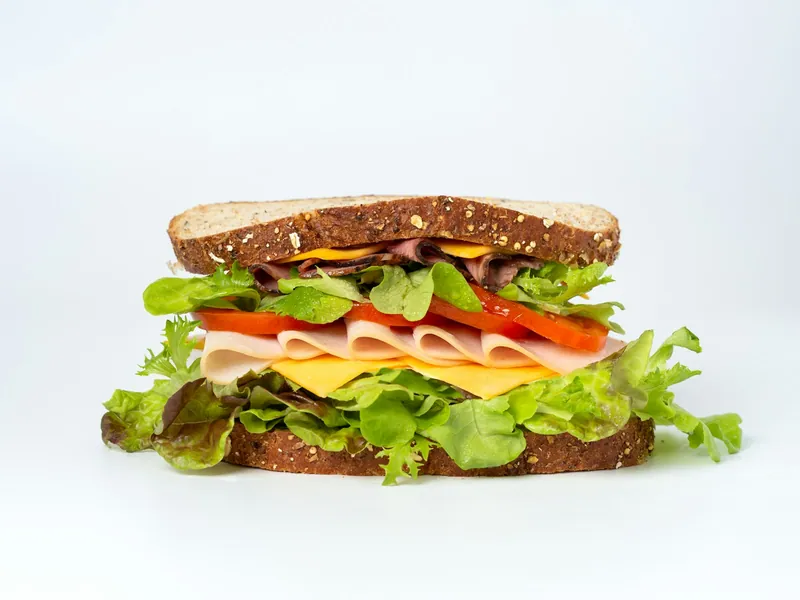
Chicken Critters Basket
A Ranger Meal — the larger step up from the kids menu, for bigger appetites still under twelve. Golden-fried all-white-meat strips.
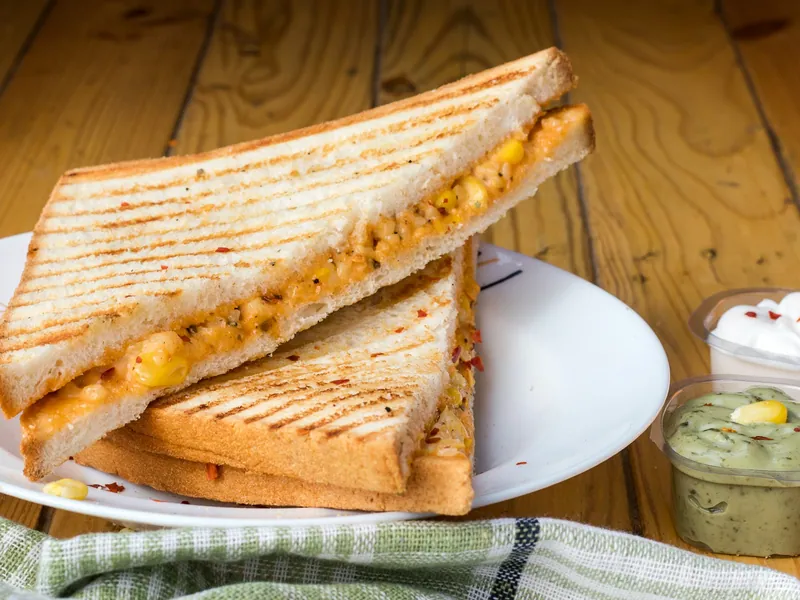
Andy's Steak
A hand-cut sirloin in a Ranger Meal portion at 250 calories — the same calorie count as the adult 6oz sirloin, which makes the portioning clearer than the price does.
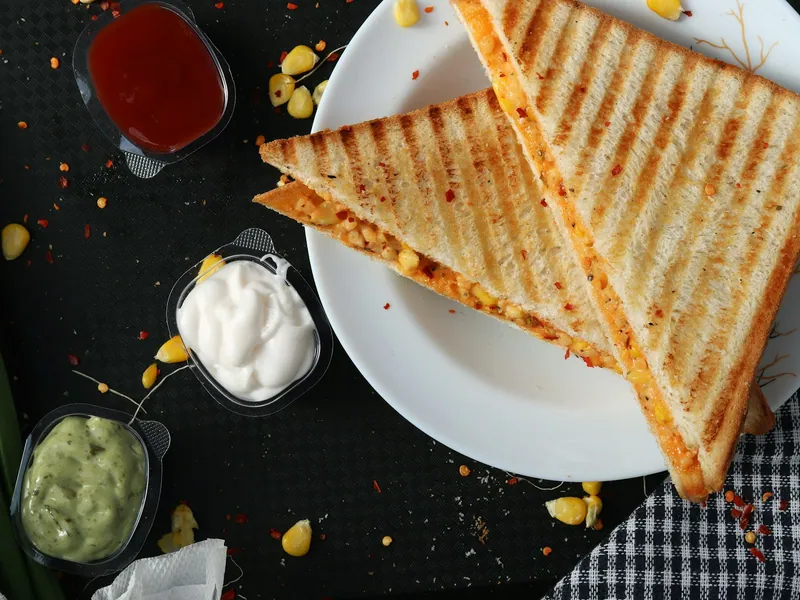
Ranger Rib Basket
A Ranger Meal portion of the award-winning ribs. Note that Ranger Meals are excluded from kids meal coins, certificates and most other offers.
Today's Hot Deals
Savings That Need No Promo Code
Reviewed August 6, 2026. These are standing offers rather than codes — no app, no sign-up, and nothing that expires next week.
11 entrées at $11.99
Early Dine
The largest standing saving available and the only one that needs no code, no app and no sign-up. Covers the 6oz Sirloin, Country Fried Sirloin, four chicken dishes, pulled pork, a single pork chop and three full-size salads. Dine-in only, not valid with other offers, not available on holidays.
Ask when you call — hours and participation are set per restaurant, and reported prices range from $8.99 to $13.99 nationally.
Reduced drinks and selected appetisers
Happy hour
Separate from Early Dine and frequently confused with it. Covers discounted drinks and a narrower set of starters rather than full entrées. A restaurant may run happy hour, Early Dine, both or neither.
Times vary by location and are commonly reported as weekday late afternoon.
Email sign-up with a welcome offer
VIP Club
The brand runs an email club that sends offers directly. This is the most reliable route to a genuine code, because the offer arrives addressed to you with its own expiry rather than being scraped from a coupon aggregator.
Sign up through the official website rather than a third-party page.
Start here
What This Guide Covers
This is an independent price and nutrition guide, not an ordering site and not an official one. Every one of the 87 items on the board is listed with its price, its calorie count and a description written to tell you what the dish is actually like to eat rather than what a marketing department would say about it.
The reason a guide like this exists is straightforward. Locations set their own prices, the printed board does not carry calorie counts beside every item, and the official nutrition calculator makes you build an order before it tells you anything. If you want to know what a 16oz Ft. Worth Ribeye costs and what it does to your day before you are sitting down with a server waiting, that information is oddly hard to find in one place.
So the texas roadhouse menu is laid out here by section, prices and calories side by side, plus the things that genuinely change the maths: which cut is the best value per ounce, what the two included sides actually add, why the Early Dine list is the cheapest route to a steak dinner, and which of the "light" options are not light at all.
The figures come from a printed in-restaurant menu supplied by the site owner, cross-checked against published nutrition data where that data exists. They will not match your local restaurant to the cent, and the section on location pricing further down explains why.
Prices
Texas Roadhouse Menu Prices by Category
The full texas roadhouse menu spans $2.99 to $33.99. At the bottom sit the sides, all priced identically at $2.99 whether you pick green beans or a loaded baked potato. At the top is the 23oz Porterhouse T-Bone at $33.99, the only item on the board above thirty dollars.
Hand-cut steaks run $12.49 for Road Kill up to $33.99 for the Porterhouse, with the everyday range falling between $13.49 and $27.99. Ribs are $17.99 for a half slab and $22.99 for a full. Chicken entrées cluster tightly between $13.49 and $14.99 — a six-item section with a $1.50 spread, which tells you the kitchen treats them as interchangeable in cost. Country dinners run $10.99 to $16.49, seafood $14.99 to $19.99, burgers and sandwiches $11.49 to $12.99, and salads $4.99 for a side portion up to $16.99 for the Steakhouse Filet Salad.
The number that matters more than any of these is what the entrée includes. Steaks and most mains arrive with two sides, which at the $2.99 list price is $5.98 of food folded into the headline number. A $13.49 sirloin is therefore closer to $7.50 of steak once the sides are accounted for. A handful of plates — Steak Kabob and Beef Tips among them — come with one side rather than two, and that is easy to miss when comparing prices.
Kids meals start at $4.99 and Ranger Meals, the larger step up for bigger appetites still under twelve, run $8.99 to $10.99. Desserts are flat-priced at $6.99 across all three. Fresh-baked bread with cinnamon butter arrives before you order anything and is not charged for.
The real value question
Which Steak Is Actually the Best Value
Headline price and value point in opposite directions on the steak page of the texas roadhouse menu, and the gap is larger than most people assume. Measured on price per ounce, the 16oz Hand-Cut Sirloin at $22.99 works out at $1.44 per ounce. The 6oz Hand-Cut Sirloin at $13.49 works out at $2.25 per ounce. Same cut, same kitchen, same seasoning — 56% more expensive per ounce for choosing the small one.
That pattern holds across every sized cut on the board. Bigger is always cheaper per ounce, because a fixed share of the price is the plate, the sides, the labour and the table, not the beef. It is why two people splitting a 16oz sirloin and ordering an extra side eat more meat for less money than two people ordering 8oz sirloins.
The Dallas Filet is where this breaks down deliberately. At $21.99 for 6oz it is $3.67 per ounce — the most expensive beef on the board by a wide margin, and more per ounce than the Porterhouse. You are not paying for volume or for flavour intensity; you are paying for tenderness, because filet is the least-worked muscle on the animal. Whether that is worth $8.50 more than a 6oz sirloin is a genuine question of preference rather than a value calculation, and the honest answer is that many people order it expecting more flavour and get less.
The Ft. Worth Ribeye sits in the middle at $1.92 per ounce for the 12oz. Ribeye carries intramuscular fat that renders during cooking, which is simultaneously where its flavour comes from and why it is 960 calories against 460 for an 11oz sirloin. It is also the most forgiving steak on the board to cook, since that fat protects the meat past medium — worth knowing if you order well done and have been disappointed by sirloin before.
Best value per ounce
16oz Hand-Cut Sirloin at $1.44/oz. The cheapest beef on the board by this measure, and lean enough that two people can split it without a heavy plate.
Most expensive per ounce
6oz Dallas Filet at $3.67/oz. Priced on tenderness, not size. Ordering it well done removes most of the reason to pay for it.
Leanest per ounce
Hand-Cut Sirloin at roughly 42 calories per ounce, against 80 for ribeye. Almost double the meat for the same calorie budget.
Two cuts on one plate
Porterhouse T-Bone, $33.99. A strip on one side of the bone and a filet on the other — the only plate that gives you both.
Nutrition
Calories on the Texas Roadhouse Menu — What the Numbers Mean
Calorie counts across the texas roadhouse menu run from 100 for a side of green beans to 2,250 for a single Cactus Blossom. That top figure deserves a moment: the heaviest item on the entire board is a starter, and it is heavier than every steak on the menu including the 20oz Bone-In Ribeye at 1,480.
This is the single most useful thing to understand about eating here. The steaks are not where the calories are. A 6oz sirloin is 250 calories. Herb Crusted Chicken is 260. Grilled BBQ Chicken is 300. These are among the lightest main courses you will find in any restaurant of this kind, because grilled muscle meat with a dry seasoning rub is simply not calorie-dense. What surrounds the protein is where the numbers come from.
Sides are the first multiplier. Green beans are 100 calories and a loaded sweet potato is 740 — the same $2.99, the same slot on the plate, 640 calories apart. Since most entrées come with two sides, that single pair of choices can swing a meal by well over a thousand calories without changing the main course at all.
Sauces and gravies are the second. Country Fried Chicken is 780 calories and the cream gravy accounts for a substantial share of it. Chicken Critters swing between 80 and 320 additional calories on dipping sauce alone — a range wider than most people would guess a dip could produce. Asking for either on the side is not a token gesture; it hands you control of a real fraction of the plate.
The third is the starters, and it is the one that catches people out. Order a Cactus Blossom for the table and a 6oz sirloin for yourself, and the appetiser you barely registered contributes nine times the calories of the steak you came for. Grilled Shrimp at 360 is the only starter that does not materially change the shape of the meal.
One caveat worth stating plainly: these figures are for the standard build as printed. Adding a Smother Your Steak topping is $2.29 and 180 to 300 calories, loading a potato is $1.29 and 150, and any custom order moves the numbers. If you are tracking closely for a medical reason, the official nutrition calculator is the place to check a specific build.
The cheapest route in
Early Dine — 11 Entrées at $11.99
Early Dine is the most under-used part of the texas roadhouse menu and the single best-value decision available if your schedule is flexible. Eleven entrées are offered at $11.99, including the 6oz Sirloin Steak Dinner, Grilled BBQ Chicken, Country Fried Sirloin, Herb Crusted Chicken, Country Fried Chicken, Chicken Critters, Pulled Pork, a single Grilled Pork Chop and three of the full-size salads.
On the sirloin alone that is a saving against the standard $13.49, and on the Country Fried Sirloin — normally $14.49 — the gap is wider. The salads are the quiet standout: a Chicken Caesar or Grilled Chicken Salad normally runs $13.49, so Early Dine takes $1.50 off a plate that was already among the larger portions on the board.
The constraints matter. Availability varies by location, it is dine-in only, it is not valid with other offers, and it is not available on holidays. Reported hours differ between sources — most commonly Monday to Thursday in the late afternoon, ending around 6pm — which is exactly the kind of detail that varies restaurant to restaurant. Call ahead rather than planning around a figure you read online, including this one.
Early Dine is also distinct from happy hour, and the two get conflated constantly. Happy hour covers discounted drinks and a narrower set of appetisers; Early Dine covers full entrées with sides. A restaurant may run both, one, or neither.
Ribs
Half Slab or Full Slab
Ribs occupy their own section of the texas roadhouse menu and come in exactly two configurations: a half slab at $17.99 and 900 calories, or a full slab at $22.99 and 1,450. Both arrive with two sides.
The five-dollar gap between them is the interesting part. A full slab is roughly double the meat for 28% more money, which makes it the better value per rib by a comfortable margin — provided you finish it. At 1,450 calories before either side arrives, plenty of people do not, and a half-eaten full slab is worse value than a finished half slab.
The honest recommendation is that the half slab is the correct order for one person eating a normal amount, and the full slab is the correct order for two people sharing alongside a starter. Ordering a full slab for one because it looks like better value is how most people end up taking half of it home.
Ribs also appear in three other places on the board, which is easy to miss. Killer Ribs at $11.99 is a starter-sized basket with steak fries and works better as a light main than as a shared appetiser. Six of the twelve Texas Size Combos pair ribs with something else. And the Ranger Rib Basket at $10.99 is the kids-menu step-up version.
Combos
Texas Size Combos — Where Surf Meets Turf
Twelve combos run from $17.99 to $29.99, pairing a steak, chicken or tenders with either grilled shrimp or a rib portion. They are the section people order from when they cannot decide, and the calorie spread across them is enormous — 520 at the light end to 1,510 at the heavy.
The lightest is Chicken Critters with a 6oz Sirloin at 520 calories, which is counterintuitive given one half of it is fried. The sirloin is lean enough that it barely moves the total. Close behind is Grilled BBQ Chicken with a 6oz Sirloin at 590, which is the best protein-per-calorie plate in the entire section and one of the best on the board.
At the other end, the 12oz Ribeye with Ribs is 1,510 calories and $29.99 — the heaviest and second-most expensive plate on the menu, with two sides still to come. It is a genuinely large amount of food and worth treating as such when ordering.
The cheapest combo is Chicken Critters with Ribs at $17.99, which undercuts several single-protein entrées. If you are feeding a large appetite without wanting to reach steak prices, that is the specific order.
Chicken & country
The Lightest Section of the Menu
The six chicken specialties on the texas roadhouse menu are priced within $1.50 of each other, from $13.49 to $14.99, and they contain the two lightest entrées available anywhere on the board. Herb Crusted Chicken at 260 calories is the single lowest-calorie main course, and Grilled BBQ Chicken at 300 is second.
What makes those figures notable is that neither is a salad. The usual advice for eating lightly in a steakhouse is to order a salad, and on this menu that advice is actively wrong — the Chicken Caesar Salad is 1,100 calories, more than four times the Herb Crusted Chicken. If someone at your table is counting, the chicken page is the answer and the salad page is the trap.
The fried options in the same section tell the other half of the story. Country Fried Chicken is 780 and Chicken Critters 480, both against a grilled equivalent in the 260 to 300 range. The batter and the gravy are doing all of that work.
Country dinners sit alongside and run heavier. Country Fried Sirloin at 1,180 calories is the heaviest non-steak entrée on the board — the batter and cream gravy together contribute more than the beef does. The Country Veg Plate at $10.99 is the cheapest full plate available and the only genuinely vegetarian-friendly entrée, though its 400 to 1,580 calorie range is the widest on the menu and depends entirely on which four sides you pick.
Sides
Every Side Costs $2.99 — So Choose on Calories
Twelve sides, and with one exception they are all $2.99. Applesauce, baked potato, buttered corn, fresh vegetables, green beans, mashed potatoes, seasoned rice, steak fries, sweet potato, sautéed onions and sautéed mushrooms all carry the same price. Only Texas Red Chili at $3.99 breaks the pattern.
Because price is constant across the section, it carries no information, and the only variable left is calories — which range from 100 to 740. On a texas roadhouse menu where most entrées include two sides, this is the highest-leverage decision on the plate and the one people put the least thought into.
Green beans at 100 calories are the lightest. Applesauce at 110 is next, and is the one side that genuinely refreshes against a rich steak. Sautéed mushrooms at 120 are the lightest of the classic steak accompaniments. At the other end, seasoned rice and steak fries are both 360, and a loaded sweet potato reaches 740.
The loaded upcharge is $1.29 and adds 150 calories to a baked potato, mashed potatoes or steak fries — but 390 to a sweet potato, taking it from 350 to 740. That is the largest loaded jump on the board and the one worth knowing before you order it out of habit.
Pairing matters too. Seasoned rice is the base for several entrées already — Steak Kabob, Filet Medallions and the Grilled Shrimp Dinner among them — so ordering it as a side alongside one of those doubles up without adding variety.
Lightest side
Green beans, 100 calories. Paired with a 6oz sirloin it produces one of the lowest-calorie complete plates the menu allows.
Heaviest side
Loaded sweet potato, 740 calories. More than the 6oz sirloin, the Herb Crusted Chicken and the Grilled BBQ Chicken combined.
Biggest loaded jump
Sweet potato, +390 calories for $1.29. Every other loaded side adds 150.
The one that is not $2.99
Texas Red Chili, $3.99 for a cup. Effectively a small starter rather than a side.
Salads
The Salad Section Is Not the Light Option
This is the part of the texas roadhouse menu most likely to mislead, so it is worth being direct. The Chicken Caesar Salad is 1,100 calories. The Steakhouse Filet Salad is 1,340 — heavier than a 12oz Prime Rib and heavier than every burger except the Smokehouse. The Grilled Chicken Salad is 810 before dressing, and dressing adds between 270 and 480 more.
The reason is the toppings rather than the greens. Jack cheese, hard-boiled egg, bacon, croutons and a creamy dressing on a bed of leaves is a calorie-dense combination, and the leaves contribute almost nothing to offset it. A Caesar is the worst offender because the dressing is the dish rather than a garnish.
There is a genuine oddity in the numbers worth pointing out: the Chicken Critter Salad, topped with fried tenders, is 690 calories — lighter than the Grilled Chicken Salad at 810. The portion of greens and toppings is smaller relative to the protein, and it more than offsets the frying. It is a good reminder that "grilled" on a menu is a cooking method, not a calorie claim.
The two side salads are where the value sits. A House Salad is $4.99 and 230 calories before dressing, which makes it the sensible way to add vegetables to a steak plate. The Caesar is the same $4.99 but 440 calories — nearly double, almost entirely from the dressing. Same price, same section, and the difference is a choice most people make without looking.
Burgers & sandwiches
Six Sandwiches, All Above 1,000 Calories
The sandwich section of the texas roadhouse menu holds six items, $11.49 to $12.99, and every one of them comes on a Texas-sized bun with steak fries and a pickle spear. That last detail is why the whole section starts above a thousand calories: the fries alone are 360 before the sandwich is counted.
The All-American Cheeseburger is 1,240, the Bacon Cheeseburger 1,340, and the Smokehouse Burger 1,440 — the heaviest sandwich and one of the heaviest plates on the board, carrying two cheeses and BBQ sauce on a half-pound patty. Adding bacon to the All-American costs $1 and 100 calories, which is one of the more proportionate upgrades available.
The BBQ Chicken Sandwich at 1,000 is the lightest item in the section and the only one not comfortably above four figures. The Mushroom Jack Chicken Sandwich is 1,070, with the jack cheese accounting for most of the gap between the two.
The Pulled Pork Sandwich is the interesting case at $11.49 and 1,230 calories. It has no patty at all, yet it lands within ten calories of the All-American Cheeseburger. The bun, the sauce and the fries do essentially all of the work — a useful illustration that on this section of the menu, the sandwich is rarely the largest component of the plate.
Swapping the steak fries for a vegetable side is the single biggest change available here, and it is worth asking about: it removes around 360 calories and replaces them with 100 to 190.
Kids & Ranger Meals
Two Tiers for Under-Twelves
The kids section of the texas roadhouse menu splits into two tiers that are easy to confuse. Kids Meals run $4.99 to $7.99 and include a drink and one side. Ranger Meals run $8.99 to $10.99 and are the larger step up for bigger appetites still under twelve.
At the entry point, the All-Beef Hot Dog and Macaroni and Cheese are both $4.99, tying for the cheapest meal on the entire board. Macaroni and Cheese at 300 calories before the side and drink is the lightest thing on the kids page.
The standout is Grilled Chicken at $6.99 and 110 calories — the lightest protein anywhere on the menu, adult sections included. For a child who will eat something other than fried food, it is a genuinely good option rather than a token one. Lil' Dillo Steak Bites at $7.99 and 170 calories is the most expensive kids meal and among the lightest.
Mini-Cheeseburgers at 670 calories are the heaviest kids option and closer to an adult portion than the $6.49 price suggests. Andy's Steak in the Ranger tier is 250 calories — the same count as the adult 6oz sirloin, which makes the portioning clearer than the price does.
One restriction that catches families out: Ranger Meals are excluded from kids meal coins, certificates and most other offers. If you are planning around a promotion, check it covers the tier you are ordering from.
Desserts & the free bread
Three Desserts, One Price, and the Rolls Nobody Counts
All three desserts are $6.99: Granny's Apple Classic at 1,110 calories, Strawberry Cheesecake at 800 and Big Ol' Brownie at 1,200. Since price carries no information here either, calories are again the only differentiator, and the cheesecake is lighter than the brownie by 400.
To put that in context, the Big Ol' Brownie contains more calories than most entrées on the menu before their sides are counted. It is four times the 6oz sirloin. All three are portioned for sharing whatever anyone at the table claims when it arrives.
Then there is the bread. Fresh-baked rolls with honey cinnamon butter arrive before you have ordered, they are refilled, and they are not charged for. They are also not on any price list, which means they are absent from most people's mental accounting of the meal entirely. A couple of rolls with butter is not a rounding error against a 250-calorie sirloin.
None of this is an argument against ordering dessert or eating the bread. It is an argument for knowing what is on the table before deciding, which is the entire point of this guide.
Why your bill differs
Why Prices Vary Between Restaurants
The prices throughout this guide come from one printed in-restaurant menu. Your local restaurant will differ, sometimes by a little and occasionally by a lot, and the reasons are worth understanding rather than treating as an error in the texas roadhouse menu you are reading.
Location is the largest factor. Restaurants in city centres, airports and high-rent areas run above suburban ones, because the rent, wages and local taxes behind the plate are different. A difference of a dollar or two on a steak between two restaurants forty miles apart is normal.
Timing is the second. Printed menus are reissued periodically rather than continuously, so a photographed menu captures a moment. Beef prices in particular move with commodity markets, and steak pricing tends to follow within a couple of print cycles. Independent sources currently report Early Dine pricing anywhere between $8.99 and $13.99 depending on who you ask and when they checked — a spread that reflects genuine variation rather than anyone being careless.
Third-party delivery is the largest single markup. Menu prices inside a delivery app commonly run well above dine-in before service fees, delivery fees and tip are added. If you are comparing a figure on this site against one in an app, you are comparing two different things.
The practical advice: use this guide to decide what to order and roughly what it will cost, and treat the exact figure as an estimate until you see the board. Calorie counts are far more stable than prices — they do not move with rent or commodity markets — so the nutrition data here will stay accurate considerably longer than the pricing will.
Putting it together
How to Order Well
Pulling the whole board together, a few decisions account for most of the difference between a good order and an expensive or unexpectedly heavy one.
If value is the priority, order the largest size of the cut you want and share it, use the Early Dine list if your timing allows, and remember that the two included sides are real money. If calories are the priority, the answer is a grilled chicken breast or a small sirloin with green beans — not a salad, and not a starter. If you want the full steakhouse experience, the Porterhouse gives you two cuts on one plate and the Bone-In Ribeye gives you the richest single one.
The mistakes that recur are consistent: ordering a small steak because the headline price is lower, ordering a salad believing it is the light choice, ordering a full slab of ribs for one person, and treating a shared starter as though it sits outside the meal. None of those are obvious from reading the board, which is precisely why the numbers in this guide are laid out the way they are.
Browse the full texas roadhouse menu with prices and calories for all 87 items, download the printable price list, or read the guides for a specific section. Everything on this site is generated from the same underlying data, so the figures on one page always agree with the figures on another.
The bread basket
The Rolls and the Honey Cinnamon Butter
They arrive before you have ordered anything, they keep arriving, and they cost nothing. For a great many people the rolls are the single most memorable thing about the whole experience, and any honest guide to the Texas Roadhouse menu has to start there rather than treat them as a footnote to the steaks.
They are yeast rolls, baked through the day rather than in one morning batch, and they come out warm enough that the butter melts on contact. That timing is the entire trick. A roll that has been sitting under a heat lamp is an ordinary dinner roll; one that came out of the oven ten minutes ago is the reason people talk about them. If the basket arrives lukewarm, asking for a fresh one is completely normal and the answer is almost always yes.
The butter is the other half. Whipped butter with honey and cinnamon, softened to the point where it spreads without tearing the roll. It is sweet — genuinely sweet, closer to a dessert spread than a savoury one — and it is the thing that divides opinion. People who expect a plain dinner roll are surprised; people who know what is coming order a second butter without embarrassment.
The practical warning is real and worth stating. The basket is free and it is bottomless, and a person who works through four rolls before the steak arrives has eaten a substantial amount of bread and butter before the meal has started. This is the most common way to leave a steakhouse uncomfortably full while feeling you ordered modestly. If you are watching the total for the evening, the rolls are the first place to look, well before you start weighing a 6oz sirloin against an 8oz.
The counter-argument is equally real: it is free food, it is good, and refusing it entirely to save calories on a night out is the kind of discipline that makes a meal worse without making anybody healthier. A sensible middle is one roll before the food arrives and one alongside it, which is enough to enjoy them without turning them into the meal.
Ask for the basket to arrive with the food rather than immediately if you want the decision taken out of your hands. Staff do this without comment and it is the single most effective thing you can do about it.
On the table
The Free Peanuts — and When They Are Not There
A bucket of in-shell peanuts sits on the table when you arrive, free, alongside the rolls. Shells traditionally go on the floor, which is part of the roadhouse presentation rather than an accident, and nobody will look at you strangely for doing it.
They serve a practical purpose beyond atmosphere: they occupy the wait. A steakhouse cooks to order, a well-done steak takes real time, and the gap between ordering and eating is longer here than at most casual restaurants. Peanuts and rolls exist to make that gap comfortable rather than tedious.
The important caveat is allergies, and it is a serious one. Open peanut shells on tables and floors mean airborne dust and residue throughout the dining room. This is not a restaurant that can be made safe for a severe peanut allergy by removing the bucket from one table, and any manager will tell you the same if you ask. If that applies to you or to someone in your party, this is the single most important thing on this page.
Some locations have stopped putting peanuts out, either for allergy reasons or because of local practice, so their presence is not guaranteed. If they matter to you either way — because you want them or because you need to avoid them — ring ahead rather than finding out at the table.
Starters
The Cactus Blossom, Rattlesnake Bites and the Rest of the Starters
The starters section is where the biggest calorie numbers on the whole board live, and almost nobody expects that. The Cactus Blossom reaches 2,250 calories — more than any steak on the menu, more than the Bone-In Ribeye, and that is before either of the two sides that come with a main. It is a whole onion, cut into petals, battered and fried, served with a dipping sauce. It is designed to be shared by a table of four and it is very good. It is also, by a wide margin, the most calorie-dense decision available in the building.
That is not an argument against ordering it. It is an argument for knowing what it is before you order it as a casual extra for two people. Split four ways alongside a meal it is a reasonable indulgence; ordered for two as a warm-up to a ribeye it is the item that decides the evening.
Rattlesnake Bites are the other name people arrive knowing. Diced jalapeño and jack cheese, breaded and fried, served with a cajun horseradish dip. There is no snake in them and there never was — the name is roadhouse theatre. They are hotter than most fried cheese and the heat builds rather than hitting immediately, which catches people out on the third or fourth one.
Beyond those two the section runs to fried pickles, potato skins, chili and wings, all built on the same principle: fried, shareable, and priced to be added to a table order without much thought. The Texas Roadhouse menu is unusual among steakhouses in how heavily it leans on this section, and the reason is that starters arrive fast while steaks do not.
The genuinely useful advice here is structural rather than about any one item. Between the free rolls, the free peanuts and a shared starter, a table can consume a full meal's worth of food before the mains arrive. Order one starter for the table rather than one each, or skip the section entirely and let the bread basket do that job for nothing.
Ordering a steak
How to Order a Steak Cooked the Way You Actually Want It
The single most common disappointment at any steakhouse is a steak that arrives cooked differently from what the customer pictured, and it is almost always a vocabulary problem rather than a kitchen error. The terms mean specific things and the kitchen cooks to those definitions, not to what the phrase means in your head.
The working scale runs from rare through medium rare, medium, medium well and well done. Rare is a cool red centre. Medium rare is warm and red — this is where most steaks are at their best and it is what the kitchen would pick if you left it to them. Medium is warm and pink, with noticeably less give. Medium well is a thin line of pink and firm throughout. Well done has no pink at all and is a fundamentally different eating experience.
The one worth spelling out is medium. A great many people who say "medium" want what the trade calls medium rare, and then find their steak firmer and less juicy than expected. If you like a steak with real pink through the middle and plenty of juice, order medium rare. If you have historically been disappointed by medium, that is very likely the reason and it is a one-word fix.
Cut thickness changes the outcome as much as the instruction does. A thin 6oz sirloin passes through medium rare quickly and lands at medium with very little margin; a thick 16oz ribeye holds a rare centre far more forgivingly. If you want a genuinely rare steak, order it on a thicker cut, because a thin one gives the kitchen almost no room to deliver it.
Send it back if it is wrong. This is a normal part of how a steakhouse operates, nobody will be offended, and a restaurant that cooks steak all day would rather remake one than have you eat something you did not order. What cannot be undone is the reverse — an undercooked steak can go back on the grill, an overcooked one cannot be uncooked.
Two paid additions are worth knowing about. Smothering a steak with sautéed onions, mushrooms, jack cheese or gravy runs a small surcharge and is the most common upgrade people order. Loading a baked potato costs a similar amount. Neither is expensive individually; both are the kind of thing that quietly adds several dollars a head across a table of four.
Dockside and drinks
Seafood, Margaritas and the Rest of the Order
The dockside section exists for the person at the table who does not want steak, and that is genuinely its job rather than a slight against it. Grilled salmon and fried catfish are the mainstays, and the salmon in particular is a sensible order for anyone watching what the evening adds up to — it is a straightforward piece of fish cooked simply, and it comes with the same two sides everything else does.
Order seafood at a steakhouse with clear expectations. The grill, the seasoning and the entire kitchen culture are built around beef, and the fish is competent rather than a destination. If somebody in your party genuinely prefers fish, they will eat well. If they are ordering it because they think it is the light option, the salmon is a better choice than the fried catfish by a wide margin, and the difference is the batter rather than the fish.
The Legendary Margarita is the drink the chain is known for and it is a substantial one. Margaritas at a steakhouse are dessert-adjacent in sugar terms, and two of them alongside a meal will add more to both the bill and the calorie total than an extra starter would. That is not a reason to avoid them; it is a reason not to be surprised by the bill at the end of a round of them.
Draught beer, soft drinks with refills and iced tea cover the rest of the table. Refills are the thing worth knowing about for a family: soft drinks are refilled at no extra charge, which changes the arithmetic of ordering them for four people considerably compared with a restaurant that charges per glass.
If you are ordering for a table and want to keep the total predictable, drinks are the lever that moves it most. Four entrées vary by perhaps twenty dollars depending on what people pick. Four rounds of margaritas move the bill further than that, and they do it without anybody noticing until the check arrives.
Comparison
How It Compares to LongHorn and Outback
These three occupy the same slot in most people's minds — mid-priced American steakhouse, family-friendly, steak plus two sides — and the honest position is that they are more alike than different. Anybody claiming a dramatic quality gap between them is overselling it.
Where a real difference exists, it is in character rather than quality. This is the loudest and least formal of the three: peanut shells on the floor, line dancing, a bar in the middle of the room, and a deliberate absence of anything resembling white tablecloths. If you want a quiet dinner and a conversation, that matters more than any comparison of steak quality, and it cuts both ways depending on who you are with.
On value, the reduced-price early menu is the clearest structural advantage. A full entrée with two sides at a substantially lower price during a defined weekday window is a genuinely better deal than the equivalent competitors run, and it is the reason a lot of regulars eat here rather than elsewhere. Nothing on this comparison matters as much as that one fact if you can eat early.
The free bread and the free peanuts are the other real difference. Competitors bring bread; the combination of unlimited rolls, cinnamon butter and peanuts before you have spent anything is specific to this chain, and for a family of four it is a meaningful amount of food that does not appear on the bill.
Where the comparison genuinely goes the other way: if you want a quiet room, a wine list that rewards attention, or a steak cooked by somebody being paid to fuss over it, none of these three is the right answer and you should be looking at an independent restaurant at roughly twice the price. Knowing which of those evenings you are having is more useful than any ranking of the three chains.
Background
Hand-Cut, Made From Scratch, and What Those Phrases Actually Mean
The chain started in 1993 in Clarksville, Indiana, founded by Kent Taylor, and grew from a single restaurant into a national operation without much changing about the format. Two operational claims from that period still shape what arrives at your table, and both are worth separating from the marketing language around them.
Hand-cut means the steaks are portioned in the restaurant rather than arriving pre-cut and vacuum-packed. There is a butcher case near the front of most locations, which is partly theatre and partly the actual working area. The practical consequence is variation: two 12oz ribeyes cut by hand are not identical, thickness varies, and thickness is what determines how forgiving the steak is to cook. It also means you can ask to see the cuts and pick one, which very few people do and which is entirely permitted.
Made from scratch, applied to the sides, means prepared in the restaurant that day rather than reheated from frozen. This is the claim that actually shows on the plate. Mashed potatoes and green beans made that morning are noticeably different from the reheated versions most chain restaurants serve, and the sides here are better than they need to be as a result. Given that every entrée comes with two of them, that is a larger share of the meal than it sounds.
What neither phrase means is that anything is being aged, dry-aged or hand-finished in the way an expensive independent steakhouse would. This is a high-volume operation cooking a lot of steak quickly and doing it consistently. That consistency is the actual achievement, and it is why the experience in one state matches the experience in another — which for most people is worth more than an occasional brilliant steak somewhere unpredictable.
Glossary
Every Term on the Board, Explained
A steakhouse board carries more vocabulary than most people are asked to deal with in a restaurant, and being unsure what a cut is called is an uncomfortable way to order. Everything you are likely to encounter is below, in plain terms.
Early Dine
A reduced-price menu covering a fixed set of full entrées, served during a defined weekday window in the late afternoon. Two sides included, same as always. Dine-in only, no coupon needed, and you have to be seated before the cut-off rather than arriving before it.
Sirloin
Lean, firm, beefy, from the rear of the animal. The value cut and the one to order if you want steak flavour without paying for tenderness. Available in several sizes, and the larger sizes cost less per ounce than the smaller ones.
Ribeye
Heavily marbled, from the mid-section. The fat is the point — it renders on the grill and carries the flavour. Richer and more forgiving than sirloin, and the cut most likely to still be good if slightly overcooked.
Filet
The tenderloin. The most tender cut on any animal and the mildest in flavour, which is why it is often wrapped in bacon or served with a sauce. You are paying for texture rather than taste.
New York Strip
Between sirloin and ribeye in both character and price. Firmer than ribeye, more flavourful than filet, with a fat cap along one edge. The steak-lover's middle option.
Porterhouse / T-Bone
Two steaks either side of a bone — strip on one side, tenderloin on the other. The largest thing on the board and genuinely shareable. A porterhouse simply carries more of the tenderloin side than a T-bone.
Prime Rib
Slow-roasted rather than grilled, sliced to order, served with jus. Different cooking method, different result: softer, more uniform, less char. Frequently sells out later in the evening because it is roasted in limited quantity.
Fall-Off-The-Bone Ribs
Slow-cooked, then grilled and glazed. The name is the description. Available as a half or full slab and as half of most combination plates.
Chicken Critters
Hand-battered chicken tenders. On both the adult and kids menus, and one of the most-ordered items in the building.
Country Fried
Battered, fried and covered in cream gravy — available on both sirloin and chicken. A completely different dish from the grilled version of the same protein.
Smothered
A paid addition to any steak: sautéed onions, mushrooms, jack cheese or brown gravy over the top. Small surcharge, ordered constantly.
Loaded
Applied to a baked potato or fries: cheese, bacon and sour cream added for a surcharge. The most common way a $2.99 side quietly becomes a $4.28 one.
Common mistakes
Six Ways People Reliably Overspend or Overorder
None of these involves eating less than you want to. Each is a decision made without noticing it was a decision.
Filling up on free bread before the food arrives. Four rolls with cinnamon butter is a meaningful amount of food, and it is the most common reason people leave uncomfortably full having ordered modestly. Ask for the basket to come with the meal.
Ordering a starter as well. Between unlimited rolls and free peanuts, the table already has food. A shared Cactus Blossom on top of that is 2,250 calories arriving before anybody has touched a steak.
Two people ordering two small steaks. Price per ounce falls as the cut gets larger. Two people splitting one big steak and ordering an extra side eat more, for less, than two people ordering the smallest cut each.
Saying "medium" when you mean medium rare. The most common cause of a disappointing steak anywhere, and a one-word fix.
Not checking whether you can eat early. The reduced-price weekday menu is the single largest saving available, it needs no coupon, and it is invisible to anybody who only ever arrives at seven.
Loading and smothering without adding it up. A dollar or two at a time, three times, across four people, is a meaningful amount added to a bill nobody remembers agreeing to.
In short
The Short Version of This Texas Roadhouse Menu Guide
Five things carry most of the value on this page. Eat early if your schedule allows it, because the reduced-price weekday menu beats every other saving available. Order the larger cut and share it rather than two small ones, because price per ounce falls as size rises. Say medium rare if you want pink in the middle. Treat the free rolls and peanuts as part of the meal rather than as something that happens before it. And order the sides seriously, because they are made in the restaurant and there are two of them with every entrée.
Everything else is preference, and this page exists to inform that rather than to direct it. A Bone-In Ribeye at 1,480 calories is an excellent steak and there is nothing wrong with wanting one. Listing the figure is what lets you decide whether tonight is the night for it — a decision nobody else can make for you and one this site is not going to pretend to.
Prices here are taken from a photographed restaurant menu and are labelled as estimates for that reason. Locations set their own pricing, so your bill will differ, and the section on location pricing above explains by roughly how much. Calorie figures are for the item as listed, and the two included sides are counted separately in every case.
The full Texas Roadhouse menu is laid out by category above with prices, calories and honest notes on every item. The meal planner totals a week of meals for you, the Early Dine page covers the reduced-price window in detail, and the guides section goes deeper on cuts, value and nutrition than one page reasonably can.
One note on how to use this guide alongside the official one. Use the company's own site and app for ordering, for exact allergen statements and for the nutrition of a specific modified plate — those are things only the restaurant can tell you accurately. Use this Texas Roadhouse menu guide for the comparisons the official sources do not make: which steak is actually the best value per ounce, what a starter costs you before the main arrives, where the reduced-price window changes the maths, and which of the choices in front of you cost nothing at all.
The number no menu prints
Every Steak Size, Ranked by Price Per Ounce
Menus print prices and weights but never the division of one by the other. Here it is for every hand-cut steak size — cheapest per ounce first. The pattern holds without a single exception: larger is always cheaper per ounce, because the two included sides, the plate and the table are a fixed cost that does not scale with the beef.
| Cut | Size | Price | Calories | Per ounce | Verdict |
|---|---|---|---|---|---|
| Hand-Cut Sirloin | 16 oz. | $22.99 | 670 | $1.44 | Best value |
| Hand-Cut Sirloin | 11 oz. | $18.99 | 460 | $1.73 | |
| Ft. Worth Ribeye | 16 oz. | $27.99 | 1,280 | $1.75 | |
| Prime Rib | 16 oz. | $28.99 | 1,260 | $1.81 | |
| Ft. Worth Ribeye | 14 oz. | $25.49 | 1,120 | $1.82 | |
| New York Strip | 12 oz. Traditional Cut | $21.99 | 640 | $1.83 | |
| Prime Rib | 14 oz. | $26.49 | 1,100 | $1.89 | |
| Ft. Worth Ribeye | 12 oz. | $22.99 | 960 | $1.92 | |
| Hand-Cut Sirloin | 8 oz. | $15.99 | 340 | $2.00 | |
| Prime Rib | 12 oz. | $23.99 | 950 | $2.00 | |
| New York Strip | 8 oz. Thick Cut | $17.49 | 420 | $2.19 | |
| Hand-Cut Sirloin | 6 oz. | $13.49 | 250 | $2.25 | |
| Dallas Filet | 8 oz. | $24.99 | 360 | $3.12 | |
| Dallas Filet | 6 oz. | $21.99 | 270 | $3.66 | Most expensive |
The 56% gap
A 6oz Hand-Cut Sirloin is $2.25 per ounce. The 16oz version of the identical steak is $1.44. Same cut, same kitchen, 56% more expensive per ounce for choosing the small one.
Two figures need an asterisk
The Porterhouse and Bone-In Ribeye both include bone in their stated weight — real weight you pay for and do not eat. Their per-ounce figures flatter them against boneless cuts.
Computed from this site's own menu data. Prices come from a printed in-restaurant menu and are set locally, so your restaurant may differ — but the per-ounce relationship between sizes holds regardless of the absolute figures.
10 Ways to Save Money
Order the larger cut of the same steak
Price per ounce falls as the cut gets bigger. The 16oz sirloin works out cheaper per ounce than the 6oz, so two people splitting one large steak pay less per ounce than two ordering small ones.
Use Early Dine if the timing suits
11 entrées at $11.99, including the 6oz Sirloin and three salads. On the sirloin alone that is a saving against the standard price. Dine-in only and availability varies.
Share a starter, or skip it
The Cactus Blossom is 2,250 calories and the Tater Skins 1,320 — both are built for a table. Grilled Shrimp at 360 is the only starter that does not materially change the meal.
Sauce and gravy on the side
Country Fried Chicken carries most of its 780 calories in the cream gravy, and Chicken Critters swing 80 to 320 calories on dipping sauce alone. Asking for it on the side puts you in control of the larger half.
Green beans instead of a loaded potato
Both are sides on the same plate. Green beans are 100 calories, a loaded sweet potato is 740. Same price, 640 calories apart.
The bread is free and it is not small
Fresh-baked bread with cinnamon butter arrives before you order. Factor it in rather than treating it as outside the meal.
Kids meals cap at 12, Ranger Meals are the step up
Ranger Meals run $8.99-$10.99 for bigger appetites still under twelve. Note they are excluded from kids meal coins, certificates and most other offers.
A side salad is $4.99 and 230 calories
The House Salad is the cheapest way to add vegetables to a steak plate. The Caesar is the same price but 440 calories, almost entirely from the dressing.
Filet is priced on tenderness, not size
A 6oz Dallas Filet is $21.99 against $13.49 for a 6oz sirloin — $8.50 more for the same weight. If tenderness is not the priority, the sirloin is the better plate.
Check whether prime rib is available before you plan around it
It is slow-roasted rather than cooked to order, so restaurants run out. Ask when you sit down rather than when you order.
Smart savings: combine rewards, email offers and group orders to lower your bill.
Frequently Asked Questions
How much does a typical meal cost?
A hand-cut steak with two included sides runs $13.49 for the 6oz sirloin up to $33.99 for the 23oz Porterhouse T-Bone. Add a drink and a shared starter and a table of two lands around $45-$60 before tax and tip. The Early Dine menu at $11.99 is the cheapest full entrée route.
Are prices the same at every location?
No. Locations set their own pricing, and the figures here come from one restaurant's printed menu. City-centre and airport locations commonly run above a suburban restaurant, and delivery apps add a further margin on top of the dine-in price.
What is the cheapest thing on the menu?
Sides are $2.99 each. The cheapest full meal is a $4.99 kids meal, and the cheapest adult entrée is the $10.99 Country Veg Plate. Among the mains, Road Kill at $12.49 is the cheapest beef plate.
Which item has the most calories?
The Cactus Blossom at 2,250 calories — a starter, not an entrée, and more than any steak on the menu. Among mains the Bone-In Ribeye leads at 1,480, and that is before either of the two included sides.
Which entrée has the fewest calories?
Herb Crusted Chicken at 260 calories, just under Grilled BBQ Chicken at 300. Both are lighter than most starters. The 6oz Hand-Cut Sirloin at 250 is lighter still, though sides are counted separately in every case.
Do steaks come with sides?
Steaks and most entrées come with two sides; a few plates — Steak Kabob and Beef Tips among them — come with one. Sides are listed at $2.99 individually, a premium side is 99¢ more, and loading a potato is $1.29.
What is Early Dine?
Early Dine is a reduced-price menu at $11.99 covering 11 entrées. Availability varies by location. Dine-in only, not valid with other offers, and not available on holidays.
Which steak is the best value?
Measured on price per ounce, the Hand-Cut Sirloin at 16 oz. — $1.44 per ounce. Larger cuts of the same steak almost always cost less per ounce than smaller ones, so the headline price and the actual value point in opposite directions.
Ready to Order?
Find your nearest location and enjoy fresh sliced subs.